Why is my jade plant dropping leaves?
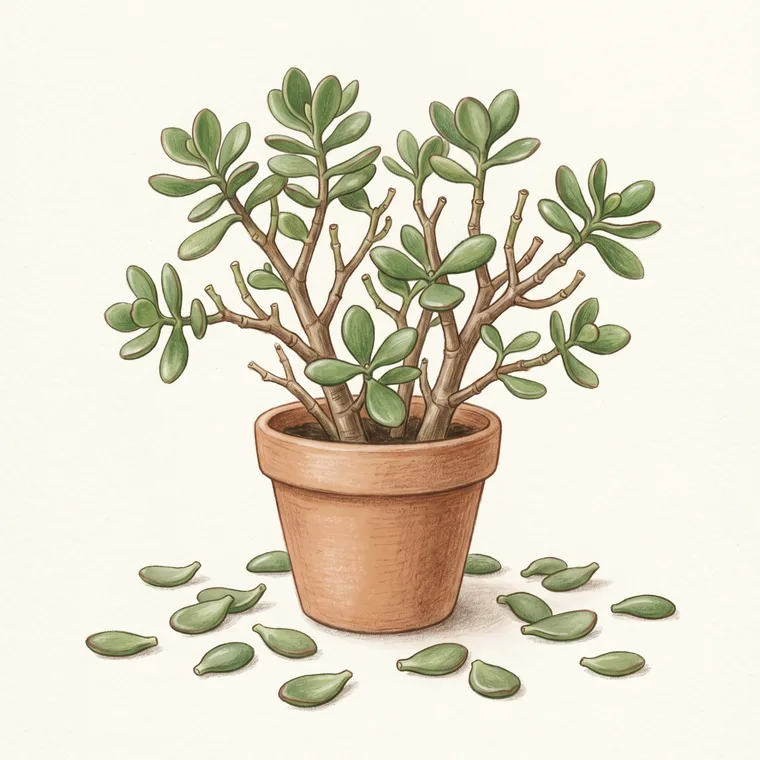
Overwatering is behind most jade plants that drop leaves: when the soil stays wet, the leaves turn soft and yellow and fall at a touch. Check the soil — if it is damp, stop watering and let it dry out completely. Cold draughts, a sudden move, and rarely severe drought can also cause leaf drop, but soggy roots are the usual culprit.

Causes, most likely first
- 1. Overwatering (the most common cause)
How to tell: Falling leaves are soft, yellowing, and plump rather than shrivelled; the soil is still damp days after watering and the base may feel mushy.
Fix: Stop watering immediately and let the soil dry out completely before the next drink. Make sure the pot drains freely and is never left standing in a saucer of water; repot into gritty mix if the stem base has gone soft.
- 2. Cold draughts or a sudden temperature drop
How to tell: Leaf drop follows a cold snap, a frosty window, or a chilly draught from a door, and lower or outer leaves go first.
Fix: Move the plant away from cold glass, draughts, and heating vents, and keep it above about 10 °C. Avoid placing it where night temperatures plunge.
- 3. Shock from a move or repotting
How to tell: Leaves drop within a week or two of being relocated, repotted, or brought in from outdoors.
Fix: Settle it in a stable bright spot and leave it be — don't repot or feed while it recovers. New growth usually resumes once it has adjusted.
- 4. Severe underwatering (less common)
How to tell: Leaves are wrinkled and shrivelled, not soft, and the soil is bone dry and pulling away from the pot.
Fix: Give it a thorough soak and resume an infrequent but regular watering rhythm; the remaining leaves should plump back up.
Preventing a recurrence
The single best safeguard is to water a jade only when the soil has dried out completely — about every 2–3 weeks in summer and as little as monthly in winter — and to drench it thoroughly when you do, then leave it alone. A gritty, free-draining mix in a pot with drainage holes makes overwatering much harder to do by accident.
Keep the plant in a bright, stable spot away from cold draughts and heat sources, and avoid moving or repotting it more than necessary. A jade that is bright, warm, and reliably dry between waterings rarely drops leaves at all. For the full routine, see the jade plant care guide.
Frequently asked questions
Is it normal for a jade plant to drop a few leaves?
Losing the odd old leaf from low on the stem is normal. Worry only when leaves drop in numbers, fall at a touch, or come away soft and yellow — that points to overwatering or a cold shock rather than ordinary ageing.
Should I water my jade plant more if it's dropping leaves?
Usually the opposite. Because overwatering is the most common cause, watering more often makes it worse. Feel the soil first: only if it is bone dry and the leaves are wrinkled rather than soft should you give it a drink.
Will the bare jade stems grow leaves back?
Often, yes. Once you fix the cause and the plant is bright, warm, and dry between waterings, new leaves usually sprout along the bare stems. You can also prune a leggy bare stem back to a node to encourage bushier regrowth.
Sources
- RHS — Crassula ovata (jade plant) — Royal Horticultural Society, checked 2026-06-13
- ASPCA Toxic and Non-Toxic Plants — Jade Plant — ASPCA, checked 2026-06-13