Why are my jade plant leaves wrinkled and shrivelled?
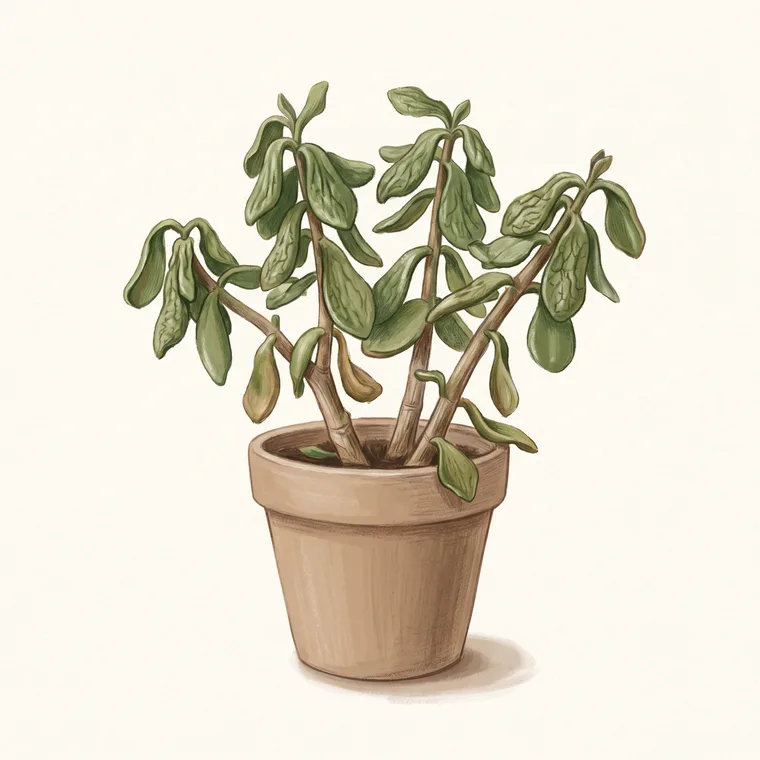
Wrinkled jade leaves most often mean simple thirst: a jade banks water in its plump leaves and they pucker as it draws those reserves down, so a good soak usually plumps them back up. The catch is that overwatering can cause the very same wrinkling — if the roots have rotted, they cannot deliver water even in wet soil. So check whether the soil is bone dry or soggy before you decide which it is.

Causes, most likely first
- 1. Underwatering — the usual cause
How to tell: Leaves wrinkle, soften and feel slightly flexible, the soil is bone dry, and the pot is light; the plant has gone a long time without a proper drink.
Fix: Water thoroughly until it runs from the drainage holes, let it drain, and the leaves should plump up over the following days. Then water again only once the soil has fully dried out.
- 2. Root rot from overwatering
How to tell: Leaves wrinkle despite damp soil, and some turn yellow, soft, or translucent and drop; the stem base may feel mushy because the rotten roots cannot take up water.
Fix: Stop watering, unpot, and cut away soft brown roots back to firm tissue. Let it dry, repot in gritty cactus mix, and resume sparing watering only when the soil is completely dry.
- 3. A pot-bound plant that dries out too fast
How to tell: An old jade whose roots fill the pot dries out within a day or two of watering and wrinkles repeatedly, because there is little soil left to hold moisture.
Fix: Repot in spring into a slightly larger container with fresh gritty mix, which gives the roots room and the soil more capacity to hold water between drinks.
Preventing a recurrence
A jade plant is a tree-like succulent from the dry slopes of South Africa, storing water in its thick leaves and stems to ride out long droughts, which is exactly why a thirsty jade wrinkles rather than wilts. The prevention is a simple rhythm: soak the soil thoroughly, then leave it completely alone until it has dried right out, then soak again. Gritty, fast-draining mix and a pot with a hole keep that cycle safe.
Because both thirst and rot can wrinkle the leaves, get into the habit of checking the soil before watering rather than reacting to the leaves alone. Lean toward dry — a jade recovers from a missed watering in days, but rot from a soggy pot can take the whole plant. Bright light and a winter rest with little water round out a near-foolproof routine.
Frequently asked questions
Will my wrinkled jade leaves plump back up after watering?
If the wrinkling was simple thirst, a thorough soak usually restores the leaves over the next few days as they refill their water stores. If they stay wrinkled or get worse after watering, the roots are likely rotting and cannot take up water — in that case you need to dry the plant out and check the roots, not give it more water.
How can both too little and too much water make jade leaves wrinkle?
In drought the leaves wrinkle because they are spending stored water faster than the roots can replace it. In overwatering the roots rot and stop functioning, so the leaves cannot draw water even though the soil is wet — and they wrinkle from the same effective shortage. The soil's moisture tells you which one you are dealing with.
How often should I water a jade plant to avoid wrinkling?
Water only when the soil has dried out completely, then soak it thoroughly — roughly every two to three weeks in summer and much less in winter, though the right interval depends on your pot, light and warmth. Checking the soil with a finger beats any fixed schedule, since a jade prefers a deep drink followed by a real dry-out.
Why is my jade dropping leaves as well as wrinkling?
Wrinkling plus dropping leaves that are soft and yellow usually means overwatering and rot. Wrinkling plus dropping leaves that are dry and shrivelled points to prolonged drought. A jade may also shed a few leaves after a sudden change in light or temperature. Check the soil and the texture of the fallen leaves to tell the causes apart.
Sources
- RHS — Crassula ovata (jade plant) — Royal Horticultural Society, checked 2026-06-15
- Missouri Botanical Garden — Crassula ovata (jade plant) — Missouri Botanical Garden, checked 2026-06-15