Why does my pothos have brown, crispy tips?
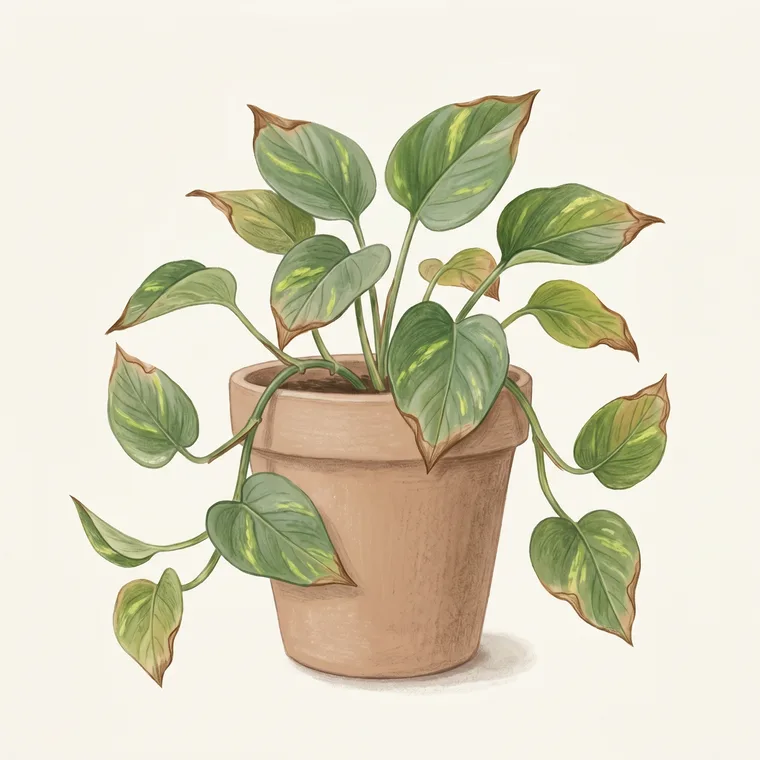
Dry, brittle pothos tips most often mean the plant has been swinging between bone-dry soil and dry indoor air, so the leaf edges lose moisture faster than the roots can replace it. Settle into watering once the top couple of centimetres dry, rather than waiting until it wilts. A whitish crust on the soil points instead to a build-up of salts from tap water or fertiliser, and a sunny window can scorch the tips outright.

Causes, most likely first
- 1. Erratic watering and dry air
How to tell: Only the leaf tips and edges turn brown and crisp while the rest stays green; the soil is often very dry and the plant sits near a radiator or in an arid room.
Fix: Water when the top 2 cm of compost dries rather than letting it shrivel, and move the plant away from heat sources. Grouping plants or a pebble tray nudges humidity up a little.
- 2. Salt build-up from tap water or over-feeding
How to tell: Brown tips come with a white crust on the soil surface or pot rim, and tend to follow frequent or strong feeding or hard tap water.
Fix: Flush the pot with several rinses of clean water to leach out accumulated salts, feed only at half strength in the growing season, and use filtered or rainwater if your tap water is hard.
- 3. Direct sun scorch
How to tell: Tips and the upper surfaces of leaves nearest a bright window bleach and brown, sometimes with papery patches, especially behind glass in summer.
Fix: Move the plant back from the window into bright indirect light; pothos colours up well without ever needing harsh midday sun on its leaves.
Preventing a recurrence
Pothos trails through humid tropical forests where its leaves rarely see fierce sun or parched air, so the brown-tip problem is really about matching that a little more closely indoors. Keep the soil evenly, lightly moist — watered before it shrivels, never left soggy — and the tips stay green. A position in bright indirect light, away from radiators and hot draughts, removes the two harshest stresses in one move.
Twice a year, run plenty of clean water through the pot until it drains freely several times to wash out fertiliser and tap-water salts, and feed sparingly. Trimming an existing brown tip along the leaf's natural taper tidies it up but does nothing for the cause, so fix the watering and position at the same time.
Frequently asked questions
Should I cut the brown tips off my pothos?
You can trim them purely for looks — snip along the leaf's natural point with clean scissors so the cut blends in rather than leaving a flat brown line. Trimming does not address why the tips browned, though, so correct the watering, air, or feeding at the same time or new tips will follow.
Do brown tips on a pothos mean overwatering or underwatering?
Crispy, dry brown tips lean toward underwatering and dry air. Overwatering instead turns whole leaves soft and yellow, often from the base of the plant. Feel the soil: if it is bone dry the tips are a thirst-and-air problem, not a soggy-roots one.
Can hard tap water cause brown tips on a pothos?
It can. Dissolved minerals and fertiliser salts concentrate at the leaf tips over time and scorch them, often leaving a chalky crust on the soil. Flushing the pot with clean water now and then, and switching to filtered or rainwater, reduces it noticeably.
My whole pothos leaf is browning, not just the tip — is that different?
Yes. A tip or edge browning is usually dryness or salts, but a whole leaf going brown and soft suggests rot from overwatering, while a whole leaf going brown and papery in a sunny spot suggests scorch. Look at where and how the browning spreads to tell them apart.
Sources
- RHS — How to grow epipremnum — Royal Horticultural Society, checked 2026-06-15
- University of Maryland Extension — Houseplant leaf problems — University of Maryland Extension, checked 2026-06-15