Does my pothos have root rot? How to spot and fix it
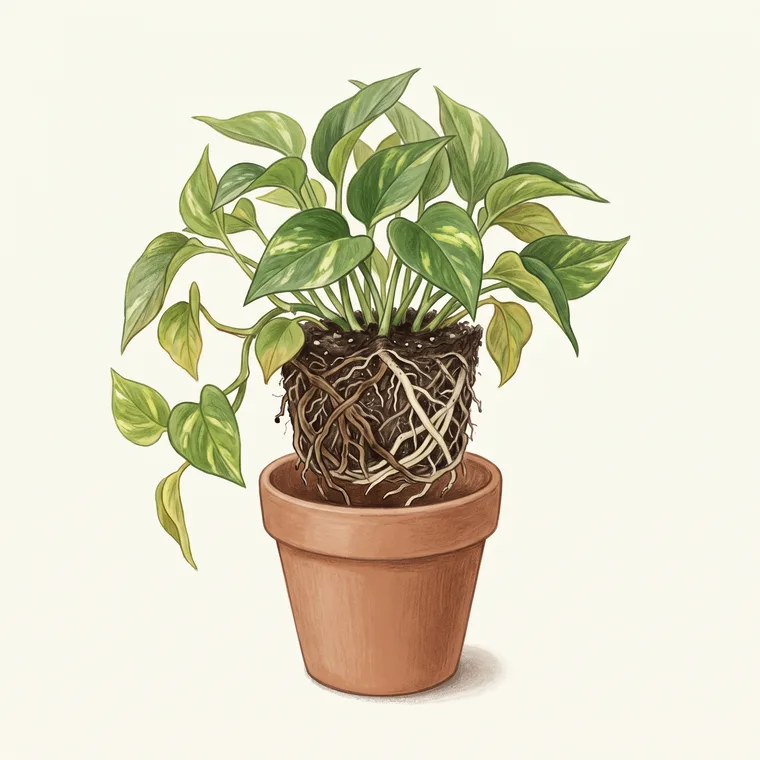
Black, slimy roots that smell sour are the unmistakable sign of pothos root rot, and overwatering is what causes it — soggy soil cuts off the oxygen roots need and lets fungi move in. The giveaway above the soil is a plant that wilts and yellows even though the soil is wet. The good news: pothos roots and regrows so readily that early root rot is one of the most recoverable houseplant problems.

Causes, most likely first
- 1. Chronic overwatering
How to tell: The soil is wet days after watering, lower leaves yellow and wilt, and the base of the stems feels soft; lifting the pot, it is heavy and slow to dry.
Fix: Stop watering immediately, move it somewhere brighter and warmer to help the soil dry, and inspect the roots. Going forward, water only when the top 3–4 cm is dry.
- 2. A pot with no drainage, or a waterlogged saucer
How to tell: The decorative pot has no hole, or water pools in the saucer and is never tipped out, keeping the rootball permanently saturated.
Fix: Repot into a container with a drainage hole, and always empty the saucer 15–20 minutes after watering so the roots are never standing in water.
- 3. Soil that holds too much water
How to tell: A dense, peaty, or compacted mix stays soggy long after watering even in a pot that drains.
Fix: Repot into a looser, airier mix — multipurpose compost cut with perlite, bark, or coir — so excess water drains and the roots can breathe.
Preventing a recurrence
Pothos climbs tree trunks in humid tropical forests with its roots clinging to bark and leaf litter, not buried in wet ground — so its roots expect air as much as water. Root rot is simply the result of denying them that air. The whole prevention plan is drainage: a free-draining mix, a pot with a hole, an emptied saucer, and watering only once the top few centimetres dry.
When in doubt, underwater. Pothos shrugs off a missed watering far more easily than a soggy week, and a slightly thirsty plant is trivially easy to rescue while a rotted one is not. If you catch yourself watering on a fixed calendar, switch to checking the soil with a finger instead.
Frequently asked questions
Can a pothos recover from root rot?
Yes, often easily. If some firm white roots remain, trim every black mushy root back to healthy tissue with sterile scissors and repot in fresh, free-draining mix. Even if the whole root system is gone, you can cut healthy vine tips and re-root them in water to start over.
How do I save a pothos when the roots are completely rotted?
Abandon the old roots and propagate. Cut several healthy vine sections, each with a few leaves and a node, and root them in a glass of water — pothos usually grows new roots within two to three weeks, after which you pot them into fresh mix.
What does pothos root rot smell like?
Rotting roots give off a distinctly sour, swampy, rotten-egg odour from the pot. Healthy pothos soil and roots have little smell, so a foul odour is a strong early warning to unpot and check before the rot spreads.
Should I use a fungicide on pothos root rot?
It is usually unnecessary. Removing the rotted roots, repotting in clean free-draining mix, and correcting the watering solves most cases. The fungi thrive on waterlogged soil, so fixing the moisture problem is what actually stops the rot, with or without a fungicide.
Sources
- Missouri Botanical Garden — Epipremnum aureum (golden pothos) — Missouri Botanical Garden, checked 2026-06-13
- University of Maryland Extension — Overwatering and root rot in houseplants — University of Maryland Extension, checked 2026-06-13