Why is my aloe vera turning brown or mushy?
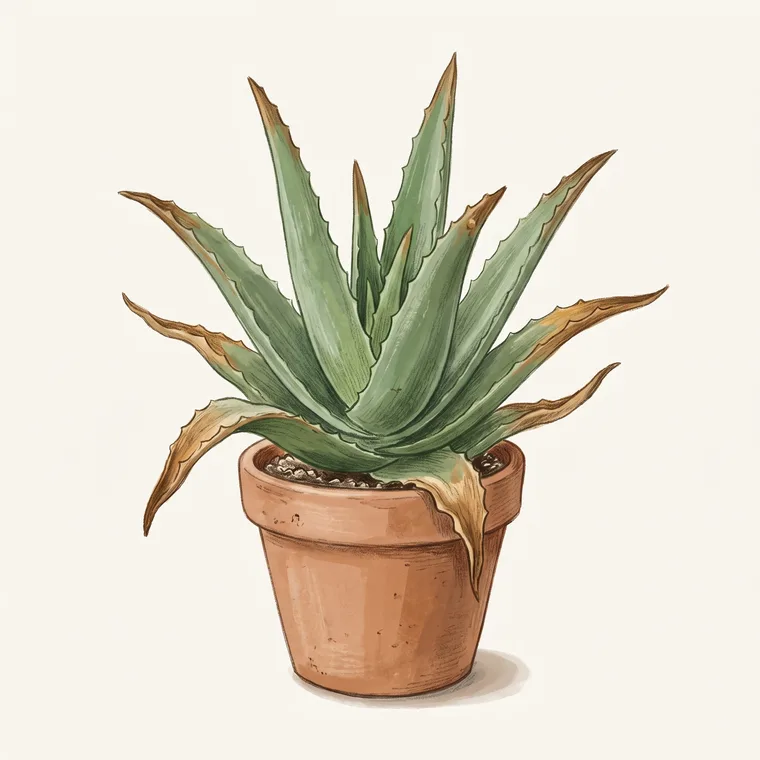
Brown aloe vera comes in two very different forms. Soft, mushy, water-soaked brown means overwatering and rot — the most common and most serious cause. Dry, papery, reddish-brown means too much harsh sun scorching the leaves. Feel the affected leaf: squishy points to a soggy pot you must dry out and inspect, while crisp and dry points to a sunburn you fix by easing the light.

Causes, most likely first
- 1. Overwatering and root rot
How to tell: Leaves turn soft, brown or translucent and water-soaked, often from the base outward, the plant feels loose in its pot, and the soil has stayed damp for a long time.
Fix: Stop watering, unpot, and cut away mushy brown roots and leaf bases back to firm tissue. Let it dry for a day or two, repot in gritty cactus mix, and water only once the soil is fully dry.
- 2. Sunburn from sudden intense light
How to tell: Leaves go dry, papery and reddish-brown on the side facing the sun, usually after a move from a shady spot straight into a hot, sunny window or outdoors.
Fix: Move it to bright but slightly less intense light and acclimatise it to full sun gradually over a couple of weeks. Established aloes love sun, but a soft plant scorches if rushed into it.
- 3. Cold damage
How to tell: Browning, sometimes with mushy patches, follows exposure to cold below about 5 °C — a frosty windowsill or a chilly night left outdoors.
Fix: Bring it somewhere reliably warm above 10 °C, keep it dry while it recovers, and trim away clearly dead, blackened tissue once new growth appears.
Preventing a recurrence
Aloe vera is a true desert succulent that banks water in its fat leaves and grows in lean, gritty, sharply drained ground under strong sun, so the browning problem is nearly always too much water at the roots or too sudden a jump in light. Pot it in cactus mix in a draining pot, water only when the soil has dried out completely, and let it acclimatise to bright sun gradually, and the leaves stay plump and green.
Lean toward dry, especially in winter when the plant barely grows — a missed watering does no harm, but a soggy week rots the base. Give it the brightest spot you have once it is used to the light, keep it frost-free, and aloe is one of the hardest houseplants to lose.
Frequently asked questions
Is my aloe brown because of too much sun or too much water?
Touch the brown leaf. Soft, mushy, water-soaked browning means overwatering and rot at the roots — the urgent problem. Dry, papery, reddish-brown browning on the sun-facing side means sunburn, which is far less serious. The texture of the leaf is the quickest way to tell the two apart.
Can a mushy brown aloe be saved?
Often yes, if you act quickly. Cut away all soft brown leaves and roots back to firm, pale tissue, let the plant dry out for a day or two so the cuts seal, then repot in dry gritty mix. If the base is gone, you can sometimes root a firm leaf or an offset (pup) to start again.
Why is my aloe vera turning brown and red at the same time?
A reddish or bronze tinge spreading with dryness usually signals stress from intense sun or, sometimes, cold or drought — the plant produces protective pigments. A little reddening in strong light is harmless, but if the leaves are also drying and browning, ease the light and check it is not also being underwatered.
Should I cut the brown tips off my aloe vera?
You can trim a dry brown tip for appearance, cutting cleanly with a sterilised knife, but it is purely cosmetic and will not stop more browning. The important step is fixing the cause — usually drying out a soggy pot or easing harsh sun — so the rest of the leaf and the new growth stay healthy.
Sources
- RHS — Aloe vera care — Royal Horticultural Society, checked 2026-06-15
- Missouri Botanical Garden — Aloe vera — Missouri Botanical Garden, checked 2026-06-15