Why are my calathea leaves curling inward?
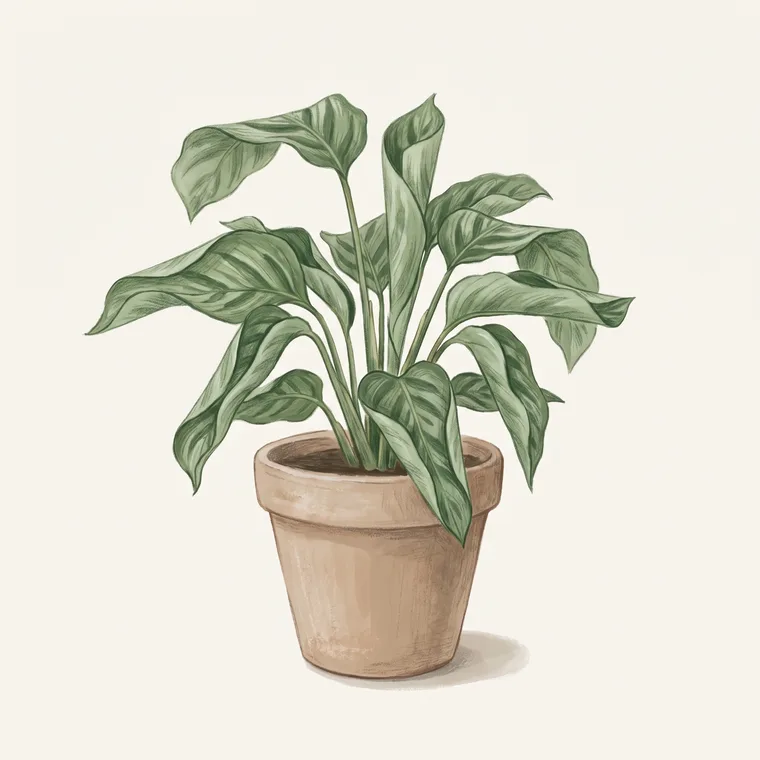
When a calathea curls its leaves inward, it is conserving moisture — almost always because the soil dried out, the air is too dry, or both. Check the soil first: if it is dry, water with rainwater or filtered water and the leaves usually relax within a day. Persistent curling points to low humidity. Harsh direct sun and the build-up of minerals from tap water are the other things that make a calathea roll up.

Causes, most likely first
- 1. Underwatering or soil dried out
How to tell: Leaves roll inward along the midrib and may feel limp; the top of the soil is dry and the pot is light, and the curling worsens through a hot or busy week of missed watering.
Fix: Water thoroughly with room-temperature rainwater, distilled, or filtered water, let it drain, and keep the soil lightly and evenly moist from then on so it never dries out fully.
- 2. Low humidity
How to tell: Leaves curl and the edges crisp brown in a dry room, especially in winter near heating, even when the soil is moist — the air, not the soil, is the problem.
Fix: Raise humidity toward 50–60%: group plants together, sit the pot on a wide pebble tray, or run a humidifier nearby. A calathea genuinely needs more moisture in the air than most homes provide.
- 3. Tap-water minerals and fluoride
How to tell: Curling comes with brown, crispy edges that build up over time, linked to hard or fluoridated tap water; the damage concentrates at the leaf margins.
Fix: Switch to rainwater, distilled, or filtered water, and occasionally flush the pot to wash out accumulated salts. Calatheas are notably sensitive to what is dissolved in their water.
- 4. Too much direct light
How to tell: Leaves curl, fade and may scorch on a bright sill in direct sun; the colours wash out and the plant looks stressed at the hottest part of the day.
Fix: Move it to bright indirect light or light shade — a calathea grows on the shaded forest floor and curls defensively under direct sun.
Preventing a recurrence
Calatheas (now classed as Goeppertia) carpet the humid, shaded floor of South American rainforests, where the air is damp, the light is filtered, and the rain is soft and mineral-poor. Curling is the plant signalling that one of those conditions is missing indoors. Recreate them — even soil moisture, humidity around 50–60%, indirect light, and low-mineral water — and the leaves stay open and flat.
The praying movement that folds the leaves up at night is normal nyctinasty and not a problem; worry only about leaves that stay curled by day. Watering with rainwater or filtered water, keeping the air humid, and shielding it from direct sun and cold draughts together prevent nearly all the daytime curling.
Frequently asked questions
Why do my calathea leaves curl up at night but open in the morning?
That daily folding is natural and healthy — it is called nyctinasty, the same movement that earns these plants the name prayer plants. The leaves rise and curl in the evening and unfurl again with the light. Only leaves that stay tightly curled during the day point to a watering, humidity, or light problem.
Will curled calathea leaves uncurl again?
If the curling is from a recent dry-out, the leaves usually relax within a day of a thorough watering with the right kind of water. Leaves that have already crisped brown at the edges will not fully recover, but correcting the moisture and humidity stops new leaves from curling.
What water should I use for a calathea?
Use rainwater, distilled, or filtered water at room temperature. Calatheas are unusually sensitive to fluoride, chlorine and dissolved salts in tap water, which build up and brown the leaf edges. Letting tap water stand overnight helps a little, but low-mineral water is far better for keeping the foliage clean.
How do I raise humidity for a curling calathea?
Aim for 50–60% humidity around the plant. Grouping it with other plants, standing the pot on a tray of pebbles topped up with water, or running a small humidifier nearby all help. Misting gives only a brief lift and can encourage fungal spots, so the tray or humidifier are the more reliable fixes.
Sources
- RHS — Calathea (Goeppertia) care — Royal Horticultural Society, checked 2026-06-15
- NC State Extension — Goeppertia (Calathea) — North Carolina State Extension, checked 2026-06-15