Why does my spider plant have brown tips?
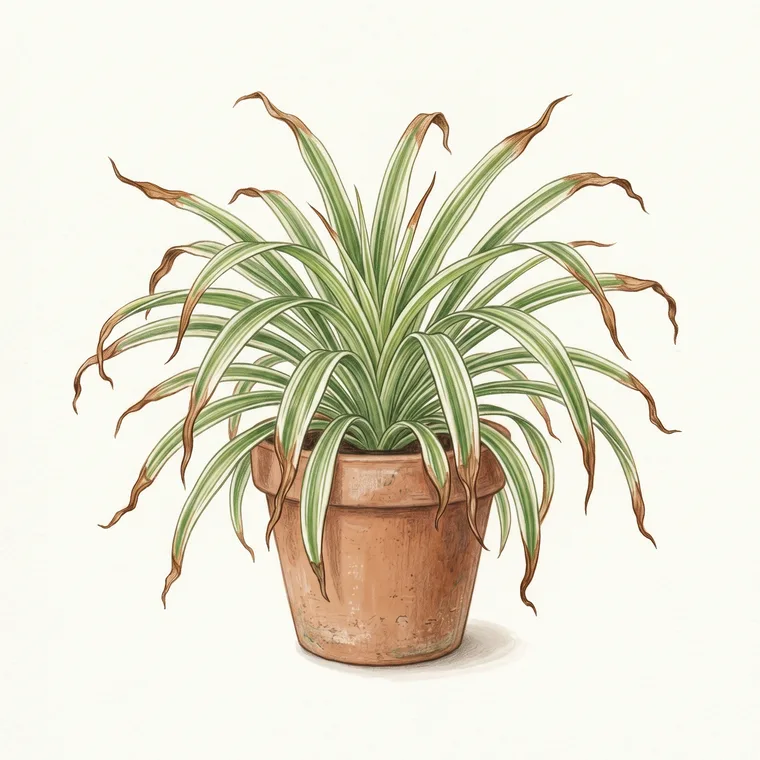
Spider plants are unusually touchy about what is in their water: fluoride, chlorine, and dissolved salts from tap water and fertiliser accumulate in the leaf tips and scorch them brown. That is the leading cause. Switch to rainwater, filtered, or distilled water and flush the soil. Inconsistent watering and dry indoor air produce the same crispy tips and are the next things to check.

Causes, most likely first
- 1. Fluoride, chlorine, and mineral build-up from tap water
How to tell: Just the very tips turn brown with a thin yellow halo, on a plant that is otherwise lush; it tends to worsen in homes with fluoridated or hard water.
Fix: Water with rainwater, distilled, or filtered water, and once in a while flush the pot with several rinses of clean water to wash accumulated salts out of the soil.
- 2. Inconsistent watering — drying out then flooding
How to tell: Tips and edges brown and the leaves look limp; the soil swings between bone dry and soggy because watering is irregular.
Fix: Settle into a steady routine: water when the top 2–3 cm dries and let it drain fully. Even moisture, never extremes, keeps tips green.
- 3. Dry air and too much heat
How to tell: Crispy tips appear or worsen in winter near a radiator or heat vent, or in an air-conditioned room with very dry air.
Fix: Move it away from heat sources and lift humidity a little — group plants together or sit the pot on a pebble tray.
- 4. Over-fertilising — salt burn
How to tell: Brown tips follow frequent or strong feeding, sometimes with a whitish crust on the soil surface or pot rim.
Fix: Feed only lightly in the growing season at half strength, and flush the soil with plain water to leach out excess fertiliser salts.
Preventing a recurrence
Chlorophytum comosum grows wild across southern Africa, adapted to seasonal rain and lean soils, and it stores water and nutrients in thick, tuberous roots. That storage is why it is so forgiving of missed waterings but so sensitive to what builds up in those roots — fluoride and salts concentrate in the leaf tips, which is why tap water is the usual culprit behind browning.
Use low-mineral water where you can, water evenly so the soil never bone-dries or stays soggy, and feed sparingly. A couple of flushes a year — running clean water through the pot until it drains freely several times — clears accumulated salts and keeps new growth tipped green.
Frequently asked questions
Should I cut the brown tips off my spider plant?
You can, for looks — trim along the leaf's natural taper with clean scissors so the cut looks like a normal point rather than a flat line. It is purely cosmetic, though; trimming does not fix the cause, so address the water or humidity at the same time.
Does tap water really cause brown tips on spider plants?
Yes — spider plants are among the houseplants most sensitive to fluoride, and chlorine and dissolved salts add to it. The minerals concentrate in the leaf tips and burn them brown. Rainwater, distilled, or filtered water noticeably reduces it.
Why does my spider plant get brown tips in winter?
Winter heating dries the air and warms the room while the plant is growing slowly, so leaf tips lose moisture faster than the roots replace it. Move it away from radiators and vents and raise humidity, and the new growth will tip green.
Are the brown-tipped leaves a sign my spider plant is dying?
No. Brown tips are cosmetic stress, not a death sentence — the plant is otherwise robust and keeps growing. Fix the cause to stop new tips browning; the plant itself is rarely in real danger from this alone.
Sources
- Missouri Botanical Garden — Chlorophytum comosum (spider plant) — Missouri Botanical Garden, checked 2026-06-13
- RHS — Chlorophytum (spider plant) care — Royal Horticultural Society, checked 2026-06-13