Why does my peace lily have brown leaf tips?
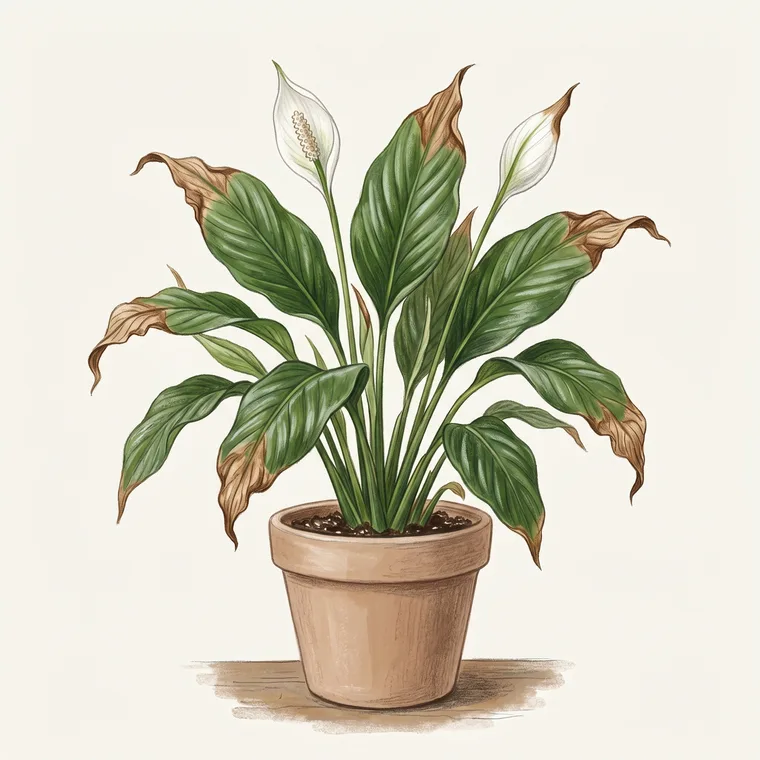
Erratic watering is the usual story behind brown peace-lily tips — letting it dry to a wilt and then drowning it stresses the leaf edges until they crisp. Steady, even moisture is the fix. Dry indoor air, the fluoride and salts in tap water, and heavy feeding cause the same browning, so rule those out next if your watering is already consistent.

Causes, most likely first
- 1. Inconsistent watering
How to tell: Tips and edges go brown and papery on a plant that regularly droops badly between waterings, then gets a heavy soak.
Fix: Water when the top 2–3 cm dries — before a full collapse — and let it drain. Even moisture keeps the leaf edges from drying and dying back.
- 2. Low humidity and dry air
How to tell: Crispy tips appear or worsen in heated winter rooms or near vents; the rest of the leaf is healthy and green.
Fix: Raise humidity by grouping plants, using a pebble tray, or moving it to a naturally humid room like a bathroom with light.
- 3. Mineral build-up from tap water
How to tell: Only the tips brown, gradually, in an otherwise lush plant; common with hard or fluoridated water.
Fix: Switch to rainwater, filtered, or distilled water and flush the pot occasionally to wash out accumulated salts.
- 4. Over-fertilising
How to tell: Brown tips follow frequent or full-strength feeding, sometimes with a white salt crust on the soil or pot rim.
Fix: Feed only every 6–8 weeks in spring and summer at half strength, and leach the soil with plain water to clear excess salts.
Preventing a recurrence
Peace lilies come from the deeply humid floor of tropical American forests, where the air is moist and the soil never dries out completely. Brown tips are the plant telling you the air or the soil is drier or saltier than it likes. The single most effective habit is steady watering — keeping the soil evenly, lightly moist rather than swinging from drought to flood.
Pair that with reasonable humidity and low-mineral water, and feed sparingly. A peace lily kept evenly moist in bright indirect light, away from heat vents, holds clean green leaf tips and rewards you with its white spathes.
Frequently asked questions
Should I trim the brown tips off my peace lily?
You can, for appearance — cut along the leaf's natural point with clean scissors so the trim blends in. It is cosmetic, so correct the watering, humidity, or water quality at the same time, or fresh leaves will brown the same way.
Why do new peace lily leaves come in already brown-tipped?
New leaves browning at the tip as they unfurl usually points to a persistent cause — chronically dry air, salty tap water, or over-feeding — rather than a one-off. Address the underlying condition and the next flush of leaves should emerge clean.
Are brown tips the same problem as a drooping peace lily?
They overlap. Severe, repeated drooping from letting the soil dry out is one of the things that browns the tips, so a plant that both wilts and crisps usually needs more consistent watering. See our guide on a drooping peace lily for the watering-rescue steps.
Can hard water alone cause peace lily brown tips?
Yes. Fluoride and dissolved minerals in hard or treated tap water accumulate in the leaf margins and tips and scorch them over time. Rainwater or filtered water, plus the occasional soil flush, noticeably reduces it.
Sources
- RHS — Spathiphyllum (peace lily) care — Royal Horticultural Society, checked 2026-06-13
- Missouri Botanical Garden — Spathiphyllum — Missouri Botanical Garden, checked 2026-06-13