Why is my fiddle-leaf fig dropping leaves?
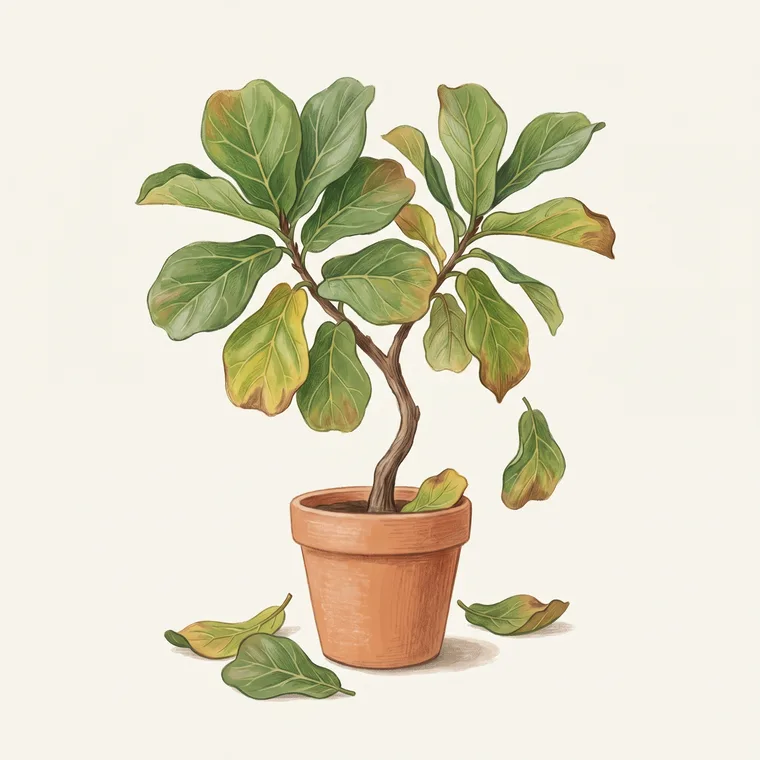
Fiddle-leaf figs drop leaves when something around them changes abruptly — a new spot, a cold draught, a swing in watering — because this finicky fig reacts to stress by shedding. Trace what changed in the days before the leaves fell. Then steady its world: a fixed bright position, no draughts, warmth above 15 °C, and consistent watering. Once conditions stop moving, the dropping stops too.

Causes, most likely first
- 1. A sudden change of environment
How to tell: Leaves start falling within a week or two of bringing the plant home, moving it to a new room, or a seasonal shift — often the lower, older leaves go first.
Fix: Settle it in one bright, stable spot and leave it there. Avoid moving or rotating it dramatically while it acclimatises; some early drop after a move is normal and slows as it adjusts.
- 2. Cold draughts or temperature swings
How to tell: Leaf drop follows exposure to a draughty door or window, an air-conditioning vent, or a cold night below about 12 °C, sometimes with brown-edged leaves.
Fix: Move it away from draughts, vents and cold glass to a spot that stays reliably warm and even, ideally 18–24 °C, with no sudden chills.
- 3. Overwatering or underwatering
How to tell: Soggy soil with soft brown-spotted leaves points to overwatering and root rot; bone-dry soil with browning, curling leaves points to drought — both end in dropped leaves.
Fix: Water when the top few centimetres dry, drain thoroughly, and never leave it sitting in water. Check the roots if the soil has been chronically wet and trim any that are mushy.
- 4. Too little light
How to tell: In a dim spot the plant slowly sheds lower leaves and grows leggy, because it cannot fund the large leaves it already carries.
Fix: Give it the brightest indirect light you can, close to a large window; a fiddle-leaf fig needs far more light than most houseplants to hold its leaves.
Preventing a recurrence
The fiddle-leaf fig comes from the warm, bright, stable lowland forests of West Africa, and that word — stable — is the whole secret to keeping its leaves on. It interprets any abrupt change as a threat and sheds in response, so the prevention is consistency: one bright spot, a steady warm temperature, no draughts, and a watering routine it can rely on. A plant whose conditions never lurch rarely drops leaves.
When you do need to move it or the seasons turn, expect a little adjustment drop and resist the urge to fuss — do not suddenly overwater or relocate a stressed plant again, which only compounds the shock. Keep its world boring and predictable and the dramatic shedding stops.
Frequently asked questions
Is it normal for a fiddle-leaf fig to drop leaves after I bring it home?
Some drop in the first week or two is common and usually just shock from the change in light, humidity and handling. Give it a bright, stable spot and steady watering and the shedding should slow as it adjusts. Ongoing heavy drop after a few weeks points to a setting that still needs fixing.
Will dropped leaves grow back on a fiddle-leaf fig?
Not on the bare patch itself — fiddle-leaf figs do not usually re-sprout leaves from old bare nodes, so a dropped lower leaf leaves a permanent gap. New growth comes from the top instead. To bush out a bare stem you can prune the tip, which encourages branching, once the plant is healthy.
Does a draught really make a fiddle-leaf fig drop leaves?
Yes — cold draughts from doors, windows and air-conditioning are one of the classic triggers. The sudden temperature swing stresses the plant and it sheds in response. Keeping it well away from vents and cold glass, in a spot with steady warmth, prevents a lot of unexplained leaf drop.
How can I tell if leaf drop is from overwatering or underwatering?
Check the soil and the fallen leaves. Wet soil with soft, dark-spotted leaves means overwatering and likely root rot. Bone-dry soil with browning, crisping leaves means it dried out too far. The fix is opposite in each case, so feel the soil before you reach for the watering can.
Sources
- RHS — Ficus lyrata (fiddle-leaf fig) care — Royal Horticultural Society, checked 2026-06-15
- Missouri Botanical Garden — Ficus lyrata (fiddle-leaf fig) — Missouri Botanical Garden, checked 2026-06-15