Why does my houseplant have tiny black flies? Fungus gnats
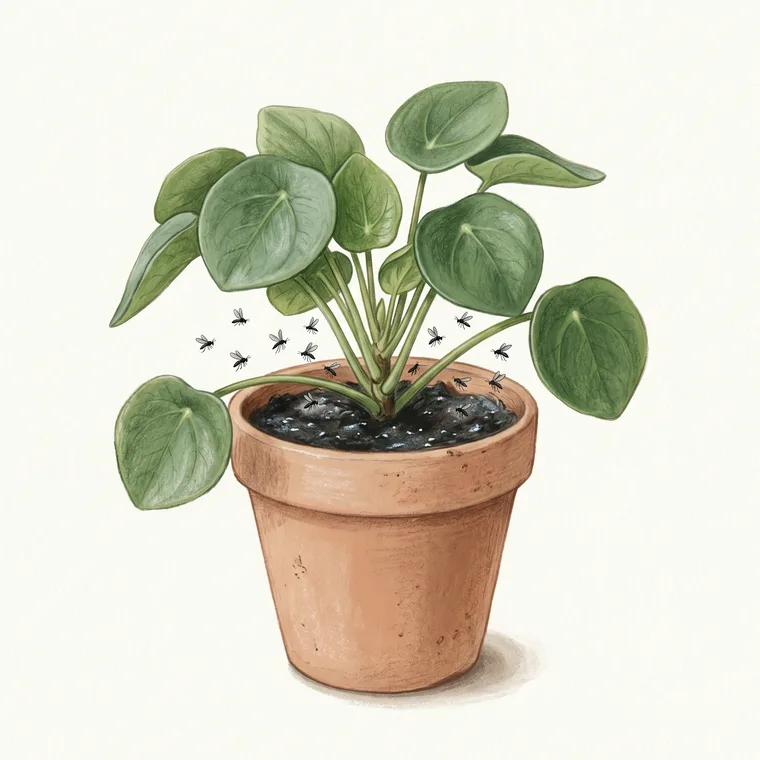
Those little dark flies drifting up from the pot are fungus gnats, and damp soil is what breeds them — their larvae live in the top couple of centimetres of constantly moist potting mix, feeding on fungus and organic matter. The fix attacks the soil, not the air: let the surface dry out between waterings, bottom-water, and catch the adults on yellow sticky traps while the larvae starve.

Causes, most likely first
- 1. Constantly damp topsoil from overwatering
How to tell: Small dark flies rise from the soil when you water or jostle the pot; the top of the mix is always moist and may grow a little algae or fungus.
Fix: Let the top 2–3 cm of soil dry out completely between waterings — the larvae cannot survive dry soil — and remove any decaying leaves from the surface.
- 2. Larvae living in the top layer of soil
How to tell: Tiny legless, transparent larvae with dark heads wriggle in the top half-centimetre of soil; the adults you see are only the visible half of the cycle.
Fix: Treat the soil: water with a Bti product (Bacillus thuringiensis israelensis, as in mosquito-dunk solution), which kills the larvae and is safe for plants and pets, or drench with a diluted hydrogen-peroxide solution.
- 3. Moisture-retaining mix or organic mulch on top
How to tell: A peaty, water-holding mix or a layer of compost or bark mulch keeps the surface damp and rich — ideal egg-laying ground.
Fix: Top the soil with a 1–2 cm layer of coarse sand, grit, or fine gravel so the surface dries fast and adults cannot reach the soil to lay eggs.
Preventing a recurrence
Fungus gnats are a moisture problem wearing the disguise of a pest problem. The adults are harmless and short-lived; it is the larvae in perpetually wet topsoil that sustain the infestation. So the durable prevention is simply how you water — let the surface dry between drinks, water from the bottom where you can, and never leave a pot standing in a full saucer. Dry topsoil breaks the breeding cycle on its own.
Back that up with a couple of cheap tools: yellow sticky traps laid flat or stood in the pot catch egg-laying adults and let you gauge whether numbers are falling, and a grit or sand topping keeps the surface inhospitable. Quarantine new plants and bagged soil briefly, since both commonly arrive carrying eggs.
Frequently asked questions
Are fungus gnats harmful to my plants or to me?
The adult gnats are a nuisance rather than a danger, and they do not bite people or pets. A heavy population of larvae can nibble fine roots and harm seedlings, but for an established houseplant the bigger issue is that they signal soil that is too wet.
How long does it take to get rid of fungus gnats?
Expect two to four weeks of consistent effort. The life cycle from egg to adult runs a few weeks, so you have to keep the topsoil dry, trap adults, and treat larvae through at least one full cycle to clear them rather than just thinning the visible flies.
Do yellow sticky traps actually get rid of fungus gnats?
Traps catch the egg-laying adults and are useful for monitoring, but on their own they only reduce numbers. You also have to dry the topsoil and kill the larvae, because every uncaught adult lays more eggs in damp soil. Use traps alongside the watering changes, not instead of them.
Will letting the soil dry out hurt my plant while I clear the gnats?
For most houseplants, allowing the top few centimetres to dry is exactly what they want anyway and does no harm. Moisture-loving plants like ferns are the exception — for those, lean on bottom-watering, a grit topping, and Bti rather than prolonged drought.
Sources
- University of Minnesota Extension — Fungus gnats in houseplants — University of Minnesota Extension, checked 2026-06-13
- UC IPM — Fungus gnats management — University of California Statewide IPM Program, checked 2026-06-13