Does my Monstera have spider mites? How to spot and treat them
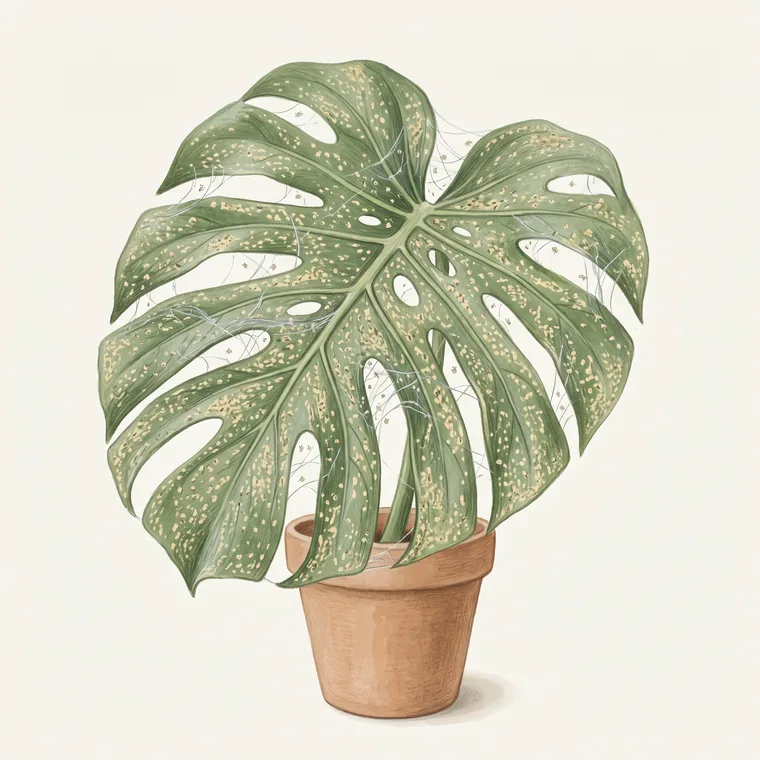
A dusty, faded look with tiny pale dots (stippling) across the leaves is the first sign of spider mites on a Monstera; fine webbing in the leaf joints confirms it. These near-invisible mites pierce the leaf cells and drain them, and they explode in warm, dry air. Isolate the plant at once, rinse the leaves, and treat every few days for several weeks to break the cycle.

Causes, most likely first
- 1. Spider mites feeding on the leaves
How to tell: Leaves look dull and stippled with countless tiny pale or yellow dots; turn one over and you may see fine webbing and specks that move. A sheet of white paper tapped under a leaf catches crawling dots.
Fix: Isolate the plant, then rinse every leaf — top and underside — under a firm spray of water to knock the mites off. Follow up with insecticidal soap or a neem-oil spray.
- 2. Hot, dry air that lets a population explode
How to tell: The outbreak follows winter heating or a dry, warm room; mites breed fastest in low humidity, so the infestation spreads quickly.
Fix: Raise humidity around the plant and keep it away from heat vents — mites struggle in moister air — while you carry out the treatment rounds.
- 3. A newly bought or recently introduced plant
How to tell: Mites appear shortly after a new plant joined the collection, having hitchhiked in on it before spreading.
Fix: Quarantine every new plant for a couple of weeks and inspect leaf undersides before placing it near others.
Preventing a recurrence
Monstera comes from humid Central American forests, and spider mites are a creature of the opposite — hot, dry, still air. The most effective long-term defence is therefore to keep the air around the plant reasonably humid and the leaves clean: wiping the big leaves occasionally removes early colonies and the dust they shelter in, and lets you spot trouble while it is still a few mites rather than a web.
Because mites reproduce so fast and can shrug off a single spraying, treat on a schedule rather than once. Repeat the rinse-and-spray every five to seven days for at least three weeks to catch newly hatched mites, and alternate between insecticidal soap and neem oil so the population does not adapt to one product.
Frequently asked questions
How do I know it's spider mites and not something else on my Monstera?
Spider mites leave fine, even stippling — countless tiny pale dots — and wispy webbing in the leaf crooks, unlike the cottony tufts of mealybugs or the sticky residue of scale. Tap a leaf over white paper: if tiny specks crawl across it, they are mites.
Will spider mites kill my Monstera?
A heavy, untreated infestation can, by draining enough cells to brown and drop the leaves, but a Monstera caught early recovers well. Existing stippled leaves stay marked; the win shows in clean new growth once you have cleared the mites over a few weeks of treatment.
How often should I spray my Monstera for spider mites?
Treat every five to seven days for at least three weeks. A single spray misses the eggs, which keep hatching, so repeated rounds are what actually breaks the cycle. Alternating insecticidal soap and neem oil keeps the mites from adapting.
Do I need to treat my other plants too?
Check them closely — spider mites spread to neighbouring plants, especially in dry air. Isolate the affected Monstera away from the rest, inspect the leaf undersides of anything that sat near it, and treat any plant showing stippling or webbing.
Sources
- University of Maryland Extension — Spider mites on houseplants — University of Maryland Extension, checked 2026-06-13
- Missouri Botanical Garden — Monstera deliciosa — Missouri Botanical Garden, checked 2026-06-13