Is my plant overwatered or underwatered?
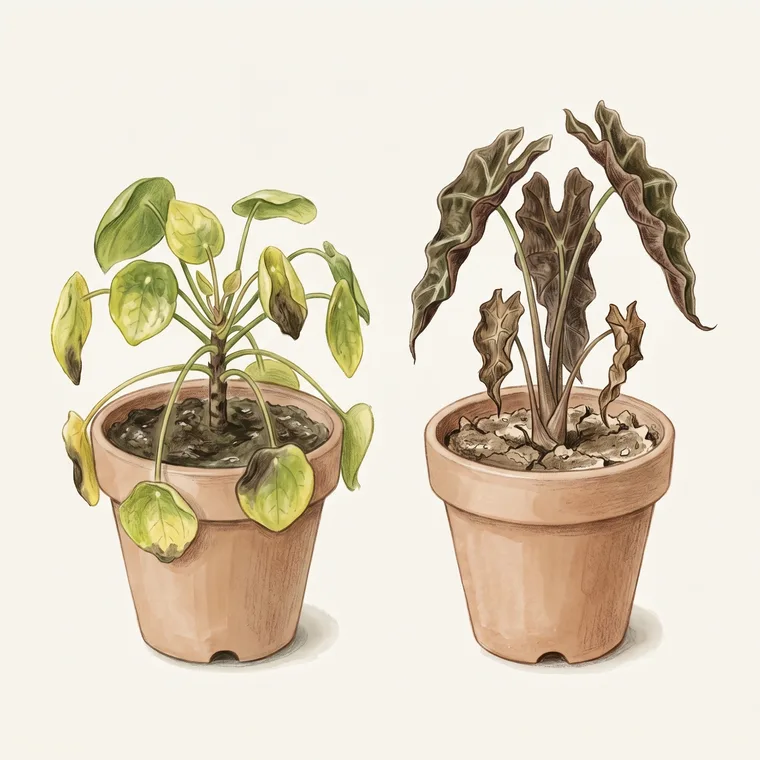
Overwatered and underwatered plants look maddeningly alike — both wilt, yellow and droop — but the soil settles the question instantly. Push a finger deep into the pot: wet, heavy soil with soft, mushy, yellow leaves means overwatering, while bone-dry soil with crispy, browning, curling leaves means the plant is parched. Checking the soil before you water, every time, is what keeps you from making the wrong one worse.

Causes, most likely first
- 1. Overwatering — too much water, too often, or poor drainage
How to tell: The soil is wet days after watering and the pot feels heavy; leaves go soft, yellow and translucent, often from the bottom up, and the stem base or roots may be brown and mushy with a sour smell.
Fix: Stop watering and let the soil dry well before the next drink. Make sure the pot has a drainage hole and empty the saucer; if the roots are rotting, trim the brown mushy ones and repot in fresh, free-draining mix.
- 2. Underwatering — the soil dried out too far
How to tell: The soil is bone dry, often shrunk away from the pot sides, and the pot is light; leaves wilt, curl, and go dry, brown and crispy at the tips and edges rather than soft.
Fix: Water thoroughly until it runs from the drainage holes, and if the soil has gone water-repellent, soak the whole pot in a basin for half an hour to rewet it. Then water more regularly, before it dries out completely.
- 3. A drainage or pot problem masquerading as a watering problem
How to tell: You water carefully but the plant still suffers, because a pot with no hole, a heavy water-holding mix, or a permanently full saucer keeps the roots either drowned or, when you overcorrect, swinging to bone dry.
Fix: Move into a pot with a drainage hole and an appropriate free-draining mix, empty saucers after watering, and let the soil — not the calendar — tell you when to water next.
Preventing a recurrence
Almost every houseplant prefers the same simple rhythm: water thoroughly, then let the soil dry to the degree that plant likes before watering again — a little for moisture-lovers, a lot for succulents. Trouble starts when people water on a fixed schedule regardless of what the soil is doing. Checking the top few centimetres with a finger, or lifting the pot to feel its weight, turns watering from guesswork into a reliable habit and prevents both extremes.
Set the plant up so mistakes are forgiving: a pot with a drainage hole, a mix suited to the species, and a saucer you empty after watering. When you are genuinely unsure, it is safer to wait — most houseplants bounce back from a missed watering far more readily than from a waterlogged, rotting root system.
Frequently asked questions
What is the single quickest way to tell overwatering from underwatering?
Feel the soil deep in the pot. If it is wet and heavy, the plant is overwatered; if it is bone dry and light, it is underwatered. The leaves alone can mislead you because both extremes cause wilting and yellowing, but the soil's moisture gives an honest answer in seconds.
Why do overwatered and underwatered plants both wilt?
In both cases the leaves cannot get enough water. When underwatered there is simply none in the soil to take up. When overwatered the roots rot and stop working, so they cannot deliver water even though the soil is soaked. The shortage at the leaf is the same; the cause at the root is opposite.
Can a plant be overwatered and underwatered at the same time?
In a sense, yes. If overwatering rots the roots and you then let the pot swing bone dry, the plant suffers thirst on top of a damaged root system. Compacted, water-repellent soil can also stay dry around the roots while pooling water elsewhere. The fix is to repot into good mix and settle into steady, moderate watering.
How do I rescue a badly overwatered plant?
Stop watering, move it somewhere brighter and warmer to help the soil dry, and unpot it to check the roots. Trim away any soft, brown, smelly roots back to firm tissue, repot in fresh free-draining mix in a pot with drainage, and water sparingly until new growth shows the plant has recovered.
Sources
- University of Maryland Extension — Houseplant watering problems — University of Maryland Extension, checked 2026-06-15
- RHS — Houseplants: watering — Royal Horticultural Society, checked 2026-06-15