Does my snake plant have root rot? Signs and the fix
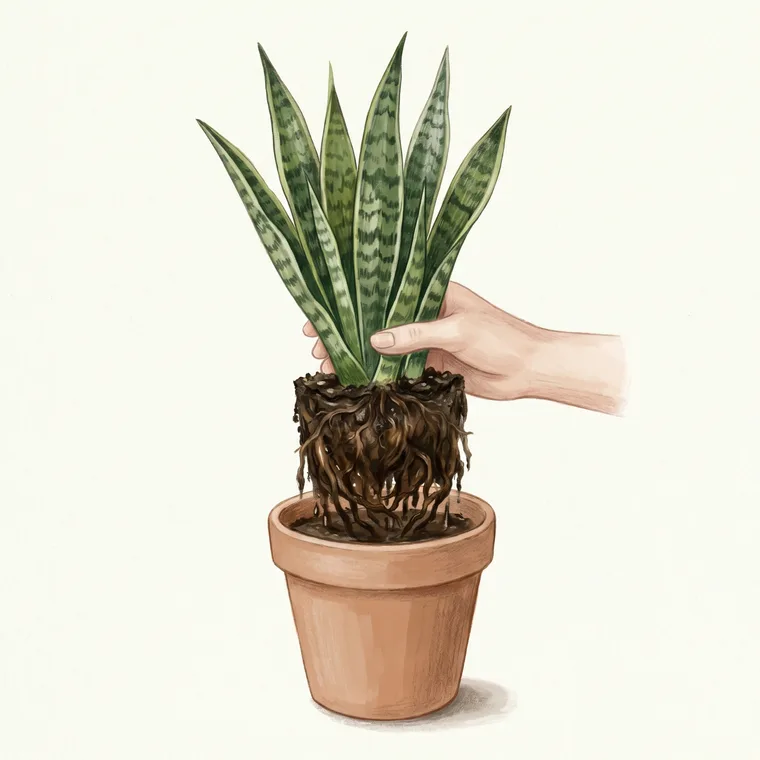
When the base of a snake plant turns soft and the leaves flop outward from the centre, root and rhizome rot is almost certainly to blame, and a wet, airless pot is what causes it. Tip the plant out and look: rotted roots are brown, slimy and smelly, while healthy ones are firm and pale. Cut away everything soft, dry the survivors out, and re-root them — this plant rescues remarkably well.

Causes, most likely first
- 1. Chronic overwatering
How to tell: Leaves soften and pull away easily at the base, the plant wobbles in its pot, and the soil has stayed wet for a long stretch — the rhizome feels squishy rather than firm.
Fix: Unpot immediately, wash off the soil, and slice away every brown mushy root and rhizome section back to clean white flesh. Let the firm pieces callus for a day, then replant in dry, gritty mix.
- 2. A pot with no drainage or a peaty, water-holding mix
How to tell: Water sits in the bottom of the pot with nowhere to go, or a dense compost stays sodden for days; the lower leaves blacken at the base first.
Fix: Always use a pot with a drainage hole and a free-draining cactus-style mix. Empty the saucer after watering so the rhizome is never standing in water.
- 3. Cold plus wet over winter
How to tell: Rot appears after a cold, damp winter spell — the combination of low temperatures and lingering moisture is far more damaging than either alone.
Fix: Keep the plant above 12 °C and water only sparingly in winter; in cool conditions a snake plant can go a month or more between drinks.
Preventing a recurrence
Root rot in a snake plant is never bad luck — it is water the plant could not use sitting against roots that need air. In the wild it grows in lean, sharply drained ground and survives long dry spells on the water banked in its leaves, so the kindest thing you can do is let the pot dry out completely before watering again. Gritty mix, a drainage hole, and an emptied saucer make rot almost impossible.
If you are unsure whether it needs water, wait. A snake plant shrugs off a missed watering but cannot recover the leaves lost to a soggy week. Lift the pot to feel its weight or push a finger deep into the mix; water only when it is bone dry all the way down, and ease right off in the cold months.
Frequently asked questions
How do I save a snake plant with root rot?
Take it out of the pot, rinse the roots, and cut away every soft brown root and rhizome section until only firm pale tissue is left. Let those pieces dry for a day so the cuts seal, then pot them up in fresh dry cactus mix and resist watering for a week or two.
Can I propagate a snake plant from a leaf if the roots have rotted?
Yes — if the rhizome is gone but a leaf is still firm, cut it into 8 cm sections, let the cut ends callus, and stand them upright the way they grew in barely damp mix. They root slowly but reliably, though variegated forms revert to plain green this way.
What does snake plant root rot smell like?
Rotting rhizome gives off a sour, musty, swampy odour that you notice as soon as you lift the plant from its pot. Healthy snake plant soil is almost odourless, so a foul smell is a strong cue to unpot and inspect before more of the base is lost.
Why does my snake plant rot even though I rarely water it?
It is usually the pot, not the frequency. A container with no drainage hole, a saucer left full, or a heavy peaty mix keeps moisture against the rhizome long after watering. Switch to gritty mix in a draining pot and the same watering schedule stops causing trouble.
Sources
- Missouri Botanical Garden — Dracaena trifasciata (snake plant) — Missouri Botanical Garden, checked 2026-06-15
- University of Maryland Extension — Overwatering and root rot in houseplants — University of Maryland Extension, checked 2026-06-15