Why won't my peace lily flower?
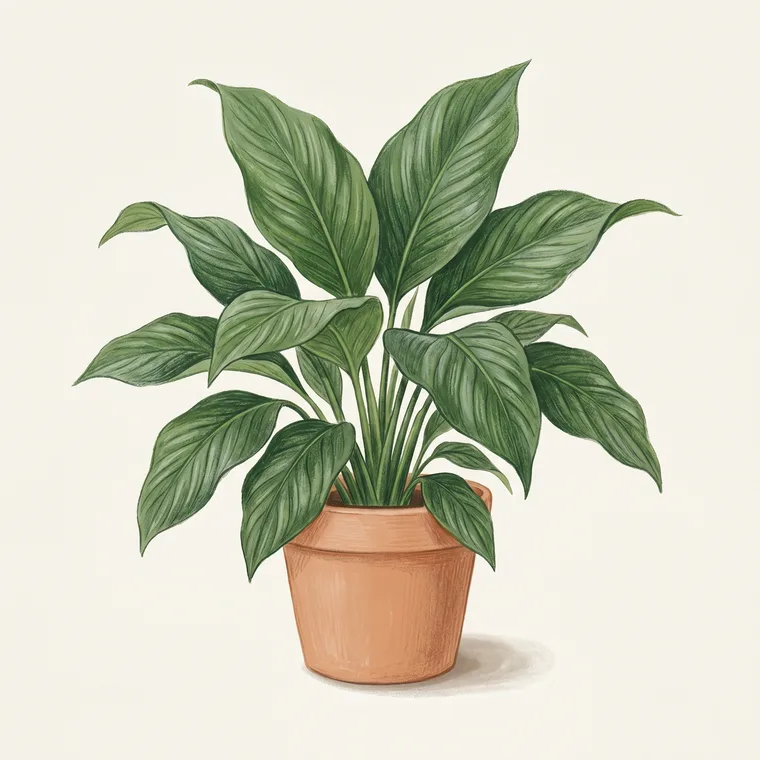
Too little light is the usual reason a peace lily stays all leaves and no flowers. It survives in deep shade but only blooms when it gets steady bright indirect light, which fuels the energy a flower costs. Move it closer to a bright window, out of direct sun, and feed lightly in spring and summer. A very young, very old, or pot-bound plant may also simply not be ready.

Causes, most likely first
- 1. Not enough light
How to tell: The plant is healthy and leafy but sits in a dim corner or far from any window, and it has produced no white spathes for months despite growing new leaves.
Fix: Move it to bright indirect light near an east or north window where it gets plenty of daylight without direct beams. More light is the single biggest lever for flowering.
- 2. Underfeeding
How to tell: A plant that has not been fed in a long time grows slowly and refuses to bloom even in reasonable light, because flowering is energy-expensive.
Fix: Feed with a balanced houseplant fertiliser at half strength every few weeks through spring and summer; a phosphorus-containing feed supports flower production.
- 3. The plant is too young or recently divided
How to tell: A small, recently bought, or freshly divided peace lily puts its energy into roots and leaves first and is simply not mature enough to flower yet.
Fix: Give it good light and consistent care and be patient — a healthy plant typically settles into flowering once it has built up a robust clump of leaves.
- 4. Florist forcing has worn off
How to tell: A shop-bought plant that bloomed beautifully when new has not flowered since, often because growers use hormones (gibberellic acid) to force show blooms.
Fix: There is no need to replicate the hormone treatment at home — simply provide bright light and feeding and let it return to its natural, if less profuse, flowering rhythm.
Preventing a recurrence
On the rainforest floor a peace lily flowers in the brighter gaps and clearings rather than the deepest shade, so the key to reliable blooms indoors is simply more light than the bare minimum it tolerates. Give it a bright spot out of direct sun, keep the soil evenly moist, and feed it through the growing season, and a healthy mature plant rewards you with flushes of white spathes.
Avoid the trap of treating it purely as a low-light survivor: it will live in a gloomy corner but it will not bloom there. A little more light and a regular dilute feed in spring and summer turn a foliage-only plant into a flowering one.
Frequently asked questions
How much light does a peace lily need to bloom?
Bright indirect light is the sweet spot — enough daylight to fund flowering, but no harsh direct sun that scorches the leaves. A position near an east or north window, or a few feet back from a brighter one, usually tips a healthy plant into producing its white spathes.
What is the white part of a peace lily flower?
The showy white hood is a modified leaf called a spathe, not a true petal; the actual tiny flowers sit on the upright spike (the spadix) it surrounds. The spathe starts pure white, then often greens and fades as it ages, which is normal rather than a sign of trouble.
Can I make my peace lily flower with fertiliser alone?
Feeding helps, but it cannot substitute for light. A plant in deep shade will not bloom however much you feed it. Get the light right first, then add a half-strength balanced or bloom-supporting feed through spring and summer to give it the resources to flower.
Why did my peace lily bloom in the shop but not since?
Commercial growers often treat peace lilies with a flowering hormone to guarantee blooms at point of sale, so a new plant arrives flowering beyond what its conditions would naturally produce. At home it reverts to its own rhythm; give it good light and feeding and it will flower again, if less heavily.
Sources
- RHS — Spathiphyllum (peace lily) care — Royal Horticultural Society, checked 2026-06-15
- Missouri Botanical Garden — Spathiphyllum (peace lily) — Missouri Botanical Garden, checked 2026-06-15