Why is my snake plant turning yellow?
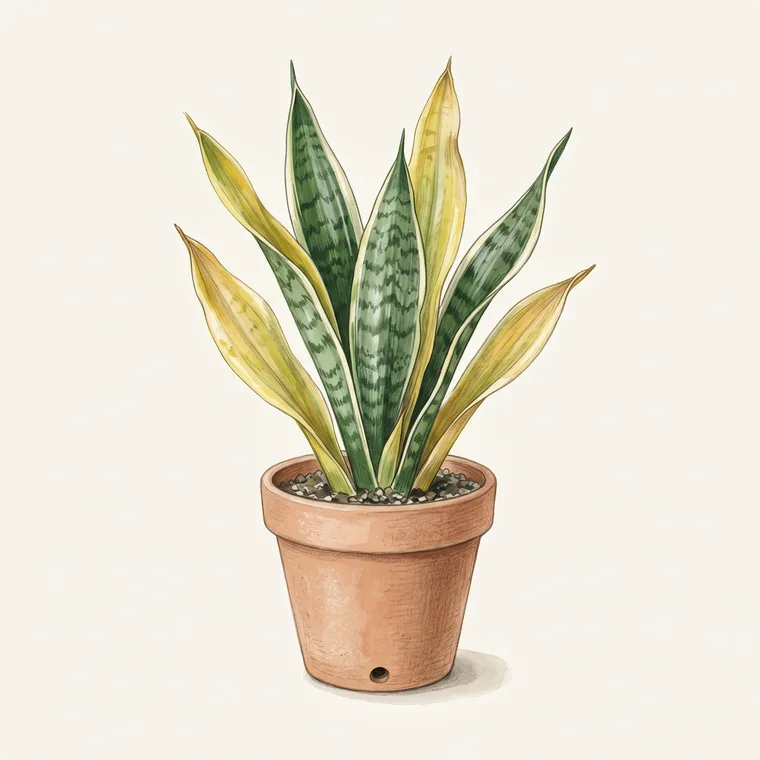
Overwatering is behind nearly every yellow snake plant. These leaves store water like a succulent, so a constantly damp pot suffocates and rots the rhizome, and the damage shows as a leaf that yellows and softens from its base. Check the soil first — if it is still wet, stop watering and let it dry right out. Sudden harsh sun and cold draughts are the rarer culprits.

Causes, most likely first
- 1. Overwatering and the onset of rhizome rot
How to tell: A leaf yellows and goes soft and mushy at the base near the soil line, often falling over; the compost is still damp days after watering.
Fix: Stop watering at once, unpot the plant, and cut away any soft brown rhizome and roots back to firm white tissue. Repot the healthy pieces into dry, gritty mix and water sparingly thereafter.
- 2. Sudden move into harsh direct sun
How to tell: A plant shifted abruptly from a shady corner to a hot, sunny window develops pale yellow, bleached patches on the sun-facing side of the leaves.
Fix: Move it back to bright indirect light and acclimatise it to stronger sun gradually over a couple of weeks if you want it on a brighter sill.
- 3. Cold damage
How to tell: Yellowing follows a spell below about 10 °C — near a frosty window or in an unheated room — sometimes with translucent, water-soaked patches.
Fix: Move it somewhere reliably above 12 °C, away from cold glass and draughts, and remove badly damaged leaves once new growth resumes.
Preventing a recurrence
A snake plant evolved in the dry savannas of West Africa, where it stores water in its thick upright leaves and a fleshy underground rhizome and goes weeks between rains. Indoors that means the single habit that keeps it green is restraint with the watering can: let the compost dry out completely, then water, then wait again. Gritty cactus-style mix and a pot with a drainage hole do the rest.
Treat winter as a near-dormant season — once a month or even less is plenty in cool, dim conditions — and keep it out of both blazing afternoon sun and cold draughts. A snake plant that is allowed to dry between drinks and kept frost-free almost never yellows.
Frequently asked questions
Should I cut off a yellow snake plant leaf?
If the leaf has gone soft and yellow at the base it is rotting and will not recover, so cut it right off at the soil line with clean scissors. A leaf with only a small yellow patch but a still-firm base can be left in place while you correct the watering.
Can an overwatered snake plant be saved once it yellows?
Usually yes, provided some firm white rhizome remains. Tip it out, trim away every soft brown section, let the firm pieces air-dry for a day, then repot them in dry gritty mix and hold off watering for a week or two while new roots form.
Why is my snake plant yellow on just one side?
One-sided yellowing usually means uneven light or sun scorch on the exposed face, or rot starting in one part of the rhizome. Check the base of that leaf: firm and pale points to light, soft and discoloured points to rot at the roots.
Is a little yellow at the very tip of a snake plant normal?
A touch of yellow or brown right at the leaf tip is often harmless ageing or a past dry spell rather than rot. Trim the tip along its natural point if it bothers you, and only worry if the yellowing spreads down toward a softening base.
Sources
- RHS — How to grow sansevierias — Royal Horticultural Society, checked 2026-06-15
- Missouri Botanical Garden — Dracaena trifasciata (snake plant) — Missouri Botanical Garden, checked 2026-06-15