Why is my snake plant drooping or falling over?
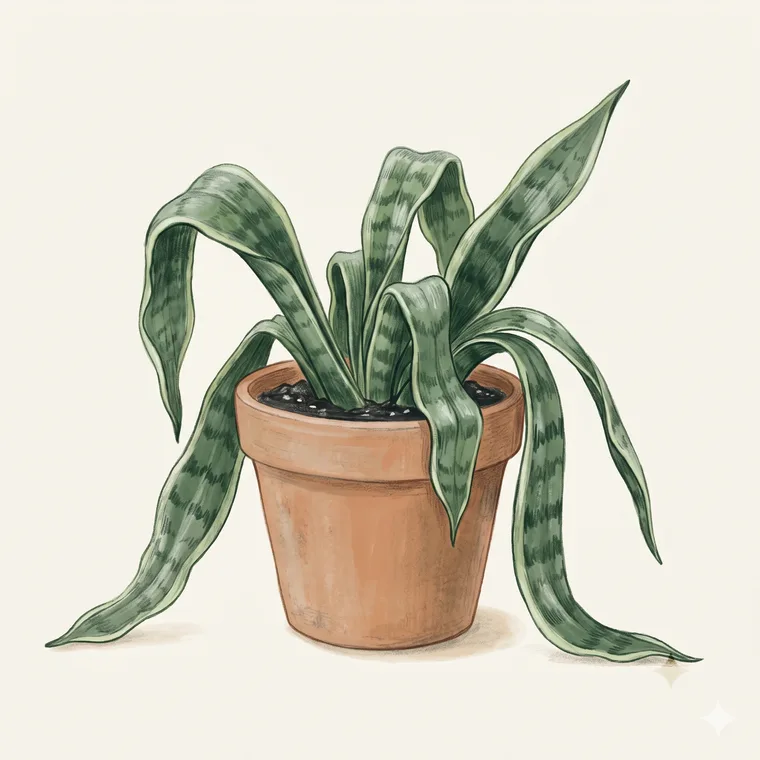
Soft, splayed leaves that flop outward from the centre point to overwatering — the most common reason a snake plant droops. Constantly wet soil rots the rhizome and softens the leaf bases, so they crease and topple. Feel the base: if it is mushy, unpot it, cut away rotten roots, and replant in dry, gritty mix.

Causes, most likely first
- 1. Overwatering and the resulting root or rhizome rot
How to tell: Leaves feel soft and squishy at the base, fold near soil level, and the soil has stayed wet for over a week; a sour smell from the pot confirms rot.
Fix: Stop watering, slide the plant out, and snip any brown mushy roots and rhizome back to firm white tissue. Replant in fresh cactus mix and wait until the soil is bone dry before the next drink.
- 2. A pot far too large, holding water around the roots
How to tell: A small plant sits in a wide pot of damp soil that takes weeks to dry; leaves lean and slowly soften rather than collapsing suddenly.
Fix: Move it into a snug pot only a little wider than the root mass, with a drainage hole, so the soil dries between waterings.
- 3. Too little light over a long stretch
How to tell: Leaves grow tall, thin, and weak, then lean away from the room toward the nearest window instead of standing upright.
Fix: Give it brighter indirect light — near an east or west window — and rotate the pot weekly so growth stays even.
- 4. Tall, top-heavy leaves with no central support
How to tell: Only the longest outer leaves splay while the plant is otherwise firm, green, and growing in dry, free-draining soil.
Fix: This is mechanical, not a health problem — loosely stake the tallest leaves, or divide a crowded clump so each section supports itself.
Preventing a recurrence
Snake plants store water in their leaves and rhizomes and evolved in dry, rocky parts of tropical West Africa, so they are built to be underwatered. Let the soil dry out completely, then water thoroughly — roughly every two to three weeks in summer and as little as once a month in winter. The base softening is the warning sign you waited too long to back off.
Always use a gritty, free-draining mix (a cactus and succulent blend, or potting soil cut with extra perlite or coarse sand) in a pot with a drainage hole, and tip away any water left in the saucer. Dry feet keep the rhizome firm and the leaves upright.
Frequently asked questions
Can a drooping snake plant stand back up on its own?
Leaves that have already creased and flopped will not stiffen up again — that tissue is permanently weakened. The plant recovers by pushing up new, upright leaves once the rot is removed and the soil dries out, so cut the worst offenders at soil level and be patient.
Should I cut off the leaves that have fallen over?
Remove any leaf that is mushy, creased at the base, or yellowing, cutting it cleanly at soil level with a sterile blade. A firm leaf that is merely leaning can stay; staking or dividing the clump is enough.
Why is my snake plant drooping after repotting?
A little flopping for a week or two after repotting is normal transplant settling. Keep it in bright indirect light, hold off watering until the fresh mix dries, and it should firm up; persistent softening means the new soil is staying too wet.
Is a drooping snake plant dangerous to pets?
The droop itself is not, but the plant is. Snake plants are toxic to cats and dogs — they contain saponins that cause drooling, vomiting, and diarrhoea if chewed (ASPCA). Keep fallen or trimmed leaves out of a pet's reach.
Sources
- Missouri Botanical Garden — Dracaena trifasciata (snake plant) — Missouri Botanical Garden, checked 2026-06-13
- RHS — Sansevieria (snake plant) care — Royal Horticultural Society, checked 2026-06-13