Why is my ZZ plant drooping and falling over?
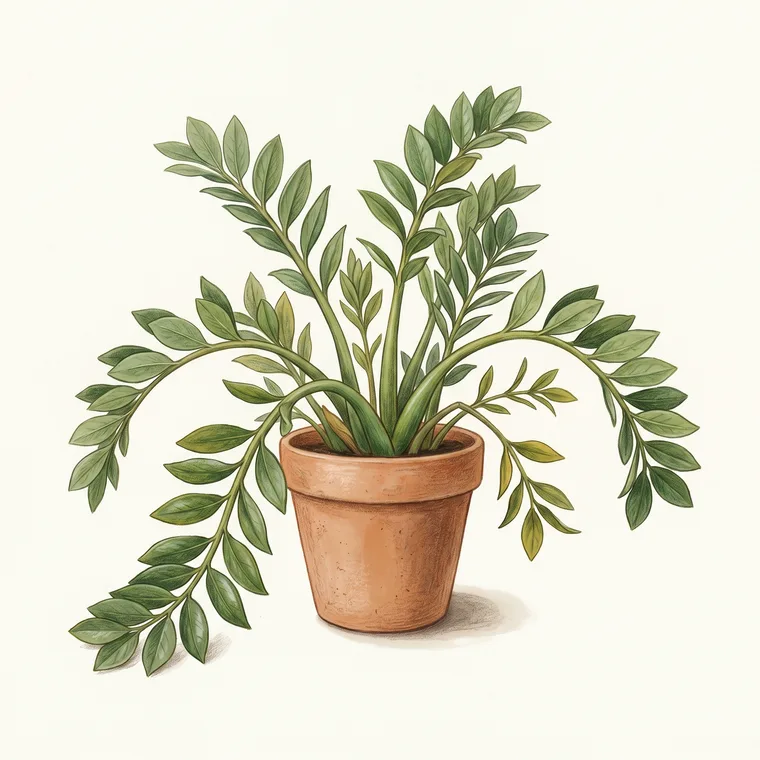
Splaying, drooping ZZ stalks are most often a sign of overwatering rotting the fat underground rhizome that holds them upright. Feel the base of the stems: soft and yellowing means rot, while firm stems on bone-dry soil point the other way, to a plant so parched it has finally wilted. Stop watering, check the rhizome, and only then decide whether to dry it out or give it a drink.

Causes, most likely first
- 1. Overwatering and rhizome rot
How to tell: Stalks fall outward from the centre and feel soft and yellow at the base; the potato-like rhizome is brown and squishy and the soil has been wet for days.
Fix: Unpot the plant, cut away any soft brown rhizome and root back to firm tissue, let it dry for a day, and repot in gritty mix. Water only once the soil is fully dry from now on.
- 2. Severe underwatering
How to tell: The whole plant has been left bone dry for many weeks; stems stay firm but go limp and wrinkled, and the leaflets curl as the rhizome's water reserves run out.
Fix: Water thoroughly, let the pot drain, and the stems usually firm up within a day or two. A ZZ tolerates drought for a long time but will eventually flop once its reserves are spent.
- 3. Too little light or a leaning reach for the window
How to tell: Stalks grow long, weak and spaced out, leaning toward the nearest light source rather than standing upright, on a plant kept in a dim corner.
Fix: Move it to brighter indirect light and rotate the pot every week or two so it grows evenly and stiffly rather than stretching and toppling.
Preventing a recurrence
The ZZ plant stores water in a thick rhizome the size of a potato, an adaptation to the seasonally dry grasslands of East Africa, which is exactly why it forgives neglect and resents a soggy pot. Drooping is the plant telling you the moisture balance has gone wrong in one direction or the other. Keep it in free-draining mix, water only when the soil has dried out completely, and it will stand to attention for months.
Give it decent indirect light so the stalks grow stout rather than stretched, and treat winter as a rest with very little water. Because the rhizome holds such a reserve, erring toward dry is always safer than erring toward wet — a thirsty ZZ recovers in a day, a rotted one rarely does.
Frequently asked questions
How can I tell if my drooping ZZ plant is overwatered or underwatered?
Feel the stems and check the soil. Soft, yellowing stalks with damp soil and a squishy rhizome mean overwatering and rot. Firm but limp, wrinkled stems on soil that is bone dry mean it is parched. The two look similar from across the room but feel completely different up close.
Will my ZZ plant's drooping stalks stand back up?
A thirsty ZZ usually firms up and lifts within a day or two of a good watering. Stalks that drooped because of rot will not recover, so once you have removed the rotten rhizome, focus on the healthy stems and any new growth that follows rather than the floppy ones.
Should I stake a floppy ZZ plant?
Staking only hides the cause. If the flop is from rot, address the rhizome; if it is from low light, move it brighter so new stalks grow stiff. A discreet ring support can tidy an otherwise healthy mature clump that has simply grown wide, but it is not a fix for a sick plant.
Why are my ZZ plant stems growing tall and leaning over?
Long, leaning stems that splay apart are reaching for light. In a dim spot the plant stretches and the widely spaced stalks cannot hold themselves up. Shift it closer to a bright window, turn it regularly, and the next flush of growth will be shorter and more upright.
Sources
- RHS — Zamioculcas zamiifolia (ZZ plant) care — Royal Horticultural Society, checked 2026-06-15
- Missouri Botanical Garden — Zamioculcas zamiifolia — Missouri Botanical Garden, checked 2026-06-15