Why is my ZZ plant turning yellow?
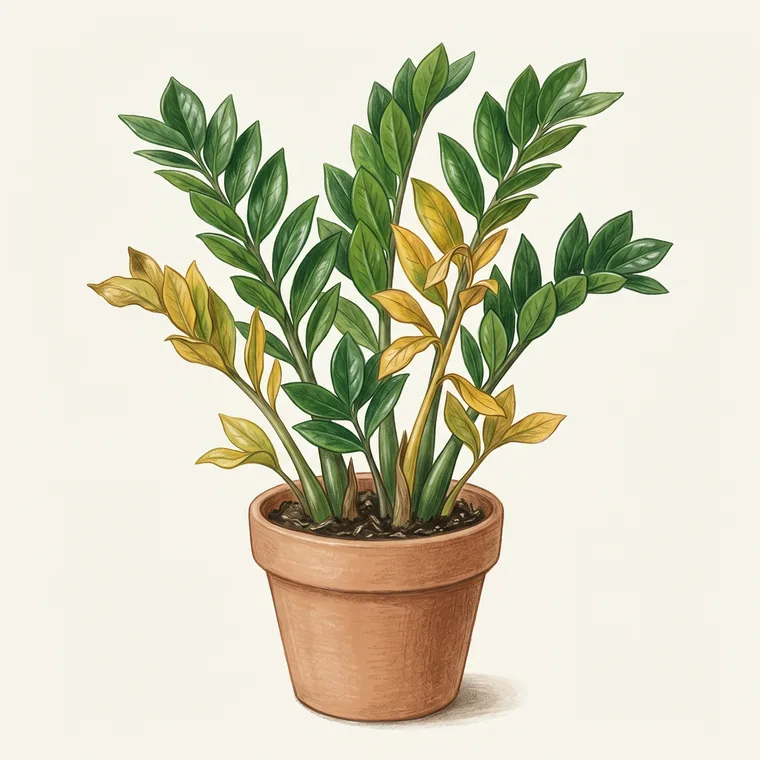
Overwatering is almost certainly your answer. Those potato-like rhizomes that let a ZZ shrug off drought are the first thing to rot in soil that never dries, and rotting rhizomes show up as yellowing leaves and soft, mushy stalks. This is one of the few houseplants you are far likelier to kill with kindness than neglect. Feel the lower stalks: if they squish and the soil is still wet, ease right off and inspect the rhizomes.

Causes, most likely first
- 1. Overwatering and rhizome rot
How to tell: Stalks yellow from the base up and feel soft or mushy, the soil is still damp long after watering, and the normally firm white rhizomes have gone brown and squishy.
Fix: Unpot it, cut away any brown mushy rhizome and root back to firm white tissue with a sterile blade, and repot in dry, free-draining mix. Then water only when the soil dries out completely.
- 2. Severe, prolonged underwatering
How to tell: Leaflets yellow and drop and the stalks wrinkle, but the soil is bone dry and the rhizomes are firm — far less common than overwatering.
Fix: Water thoroughly and let it drain; a badly dried rootball benefits from a 15–20 minute soak in a basin. The ZZ tolerates drought well, so this is rare.
- 3. Natural ageing of an old stalk
How to tell: A single older stalk slowly yellows from the tip while new shoots emerge green and upright from the base.
Fix: Nothing to fix — cut the spent stalk at soil level. ZZ plants periodically shed an old cane as they put up new ones.
- 4. Too little or harsh light
How to tell: Leaves slowly pale or yellow in a very dark corner, or scorch and bleach if moved into direct sun.
Fix: Give it bright to moderate indirect light; the ZZ tolerates low light but does not thrive in deep gloom, and direct midday sun burns the glossy leaflets.
Preventing a recurrence
Zamioculcas zamiifolia grows in the seasonally dry grasslands and forests of eastern Africa, surviving long droughts on the water hoarded in its potato-like rhizomes. That storage organ is exactly what rots when you overwater, so the golden rule is to let the soil dry out completely between drinks — roughly every two to three weeks, and even less in winter.
Use a gritty, free-draining mix in a pot with a drainage hole, and never leave it standing in water. Treat the ZZ like a succulent that happens to look like a glossy fern: dry feet, indirect light, and a forgiving hand with the watering can keep the stalks firm and green.
Frequently asked questions
Why is my ZZ plant yellow and the stalks are mushy?
Soft, mushy stalks alongside yellowing are the classic signature of overwatering and rhizome rot. The water-storing rhizome has begun to rot in soggy soil. Unpot the plant, cut away every brown squishy section back to firm white tissue, and repot dry.
Can a ZZ plant recover from overwatering?
Yes, if any firm rhizome and root remain. Trim away all rot, let the plant and any healthy rhizomes dry for a day, and repot in fresh free-draining mix. A firm rhizome holds enough stored energy to push out new growth even after losing leaves.
Should I cut off the yellow stalks on my ZZ plant?
Remove a stalk that has yellowed substantially or gone soft, cutting it at soil level with clean shears. A stalk that is only slightly yellow at the very tip can stay; the plant withdraws useful resources from a dying cane before fully shedding it.
Is the ZZ plant's sap dangerous when I'm trimming it?
The ZZ plant is toxic to cats and dogs and mildly irritating to people — it contains insoluble calcium oxalate crystals (ASPCA), so its sap can irritate skin and eyes. Wash your hands after trimming, keep cuttings away from pets, and avoid touching your face.
Sources
- Missouri Botanical Garden — Zamioculcas zamiifolia (ZZ plant) — Missouri Botanical Garden, checked 2026-06-13
- RHS — Zamioculcas zamiifolia care — Royal Horticultural Society, checked 2026-06-13