Why is my Monstera drooping and wilting?
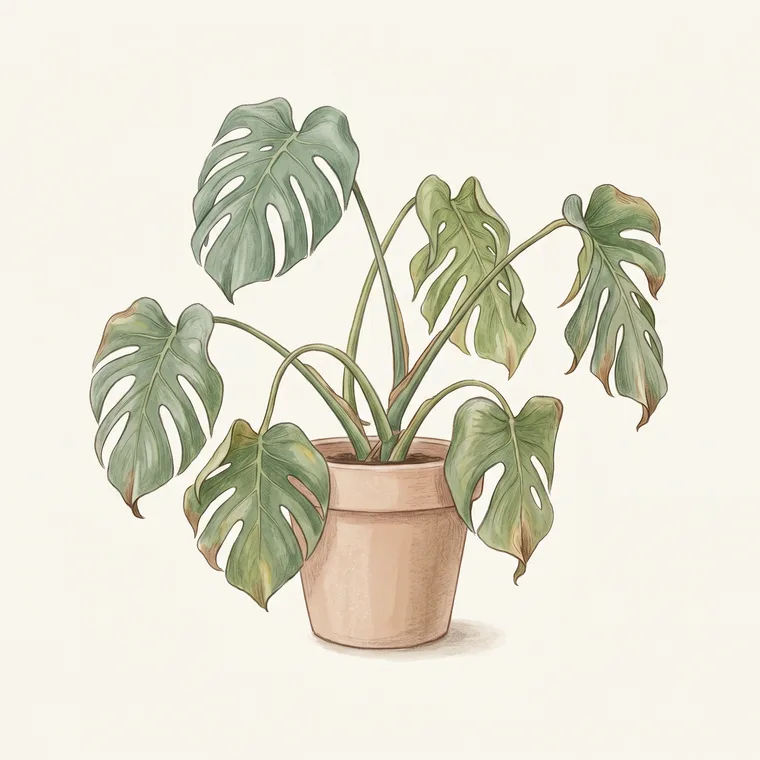
A drooping Monstera is almost always reacting to water — either it is thirsty, with bone-dry soil, or it is waterlogged, with roots too rotten to drink. The quick test is the soil: dry and light means give it a thorough drink, soggy and heavy means stop and check the roots. Once you have ruled out both, look at cold draughts and whether a big leaf has simply lost its support.

Causes, most likely first
- 1. Underwatering — the soil has gone too dry
How to tell: Leaves and stems sag softly, the soil is dry well below the surface, and the pot feels light; the foliage often perks up within hours of a thorough watering.
Fix: Water deeply until it runs from the drainage holes, let it drain, and settle into checking the top 3–5 cm and watering before it dries out entirely.
- 2. Overwatering and root rot
How to tell: Leaves droop while the soil is still wet days after watering, lower leaves yellow, and the stem base may feel soft — the roots cannot take up water because they are rotting.
Fix: Let the mix dry out, check the roots and trim any brown mushy ones, and repot into chunky aroid mix. Make sure the pot drains and never leave it standing in water.
- 3. Cold, draughts, or sudden environmental shock
How to tell: Drooping follows a cold snap, a draughty doorway, or a recent move, and the leaves look limp rather than yellow or rotten.
Fix: Move it to a stable, warm spot above 15 °C, away from draughts and cold glass, and give it time — Monsteras sulk after a shock but recover once conditions steady.
- 4. Heavy leaves with no support
How to tell: A large, mature Monstera sprawls and its long-stemmed leaves flop outward, not from ill health but from the sheer weight of foliage on unsupported stems.
Fix: Add a moss pole or stake and tie the main stems in; as a climber it grows far more upright and holds its leaves better with something to cling to.
Preventing a recurrence
Monstera deliciosa climbs through warm, humid Central American forests, rooting in loose leaf litter and hauling itself up tree trunks, so it is built for steady moisture, warmth and something to climb — not for drought, sogginess or cold. Match that with a chunky, free-draining aroid mix, watering when the top few centimetres dry, and a stable spot out of draughts, and the leaves stay turgid and upright.
Give a maturing plant a moss pole early so the heavy leaves have support as they grow, and keep the temperature comfortable and even. Avoid the two extremes that cause most drooping — letting it bone-dry or leaving it soggy — and a Monstera rarely flops.
Frequently asked questions
How quickly will a thirsty Monstera recover after watering?
If drooping was caused by dry soil, a Monstera usually lifts its leaves within a few hours to a day of a deep, thorough watering. If it is still limp after a full day with soil that drained properly, the problem is more likely overwatered, rotting roots rather than simple thirst.
Why is my Monstera drooping after repotting?
Some droop is normal transplant shock — disturbed roots take a week or two to settle and resume taking up water. Keep it warm, in bright indirect light, and water only when the new mix begins to dry; resist the urge to overwater a stressed plant, which only adds rot to the shock.
Can a Monstera droop from too much light?
Intense direct sun can stress a Monstera into wilting and scorching as the leaves lose water faster than the roots supply it, especially behind glass. Move it back into bright indirect light. More commonly, though, drooping is about water at the roots rather than light on the leaves.
My Monstera droops at night and recovers by day — is that a problem?
Mild daily movement of the leaves is normal and not a worry. Persistent drooping that does not recover, or sagging paired with yellowing or soggy soil, is the kind to act on. Check soil moisture and root health rather than reacting to small day-to-night shifts.
Sources
- RHS — Monstera deliciosa (Swiss cheese plant) care — Royal Horticultural Society, checked 2026-06-15
- Missouri Botanical Garden — Monstera deliciosa — Missouri Botanical Garden, checked 2026-06-15