Why are my Monstera leaves turning yellow?
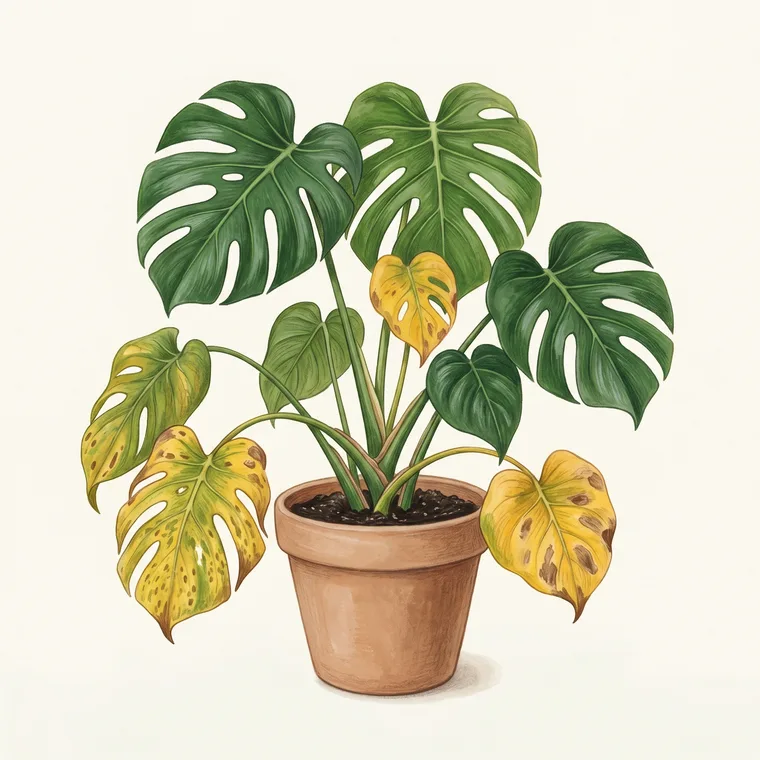
Reach for the soil before you reach for the watering can: overwatering is behind most yellow Monstera leaves. When the mix stays soggy, the roots cannot breathe and the oldest, lowest leaves yellow first. Let the top 3–5 cm dry out before watering again. If only one ancient bottom leaf yellows while new growth looks great, that is normal ageing.

Causes, most likely first
- 1. Overwatering — the most common trigger
How to tell: Lower leaves yellow evenly and may show brown, soft patches; the soil is still wet several days after watering and the pot feels heavy.
Fix: Let the top 3–5 cm of soil dry, empty the saucer, and make sure the pot drains. If many leaves yellow and the stems soften, check the roots for brown mushy rot and trim them.
- 2. Too little light
How to tell: Leaves pale and yellow across the plant, new growth is small with few or no splits (fenestrations), and the Monstera is set well back from any window.
Fix: Move it to bright indirect light, a metre or two from an east or south-facing window. Brighter light slows yellowing and brings back the holes and splits.
- 3. A natural old leaf shedding
How to tell: A single oldest leaf, low on the stem, yellows slowly while everything above it stays deep green and healthy.
Fix: Nothing to fix — let it finish yellowing and remove it once it comes away easily. The plant is reclaiming nutrients from a leaf it no longer needs.
- 4. Nutrient shortage in long-unfed or pot-bound plants
How to tell: Newer leaves yellow between the veins while the veins stay green, often in a plant that has not been fed or repotted in a year or more.
Fix: Feed with a balanced houseplant fertiliser at half strength every few weeks in spring and summer, and repot if the roots have filled the pot.
Preventing a recurrence
Monstera deliciosa climbs through the warm, humid forests of southern Mexico and Central America, rooting in loose leaf litter rather than dense, wet soil. Mimic that with a chunky aroid mix — bark, perlite, and coir — and water only when the top few centimetres dry. That single habit prevents most yellowing, because the plant tolerates a missed watering far better than a soggy week.
Give it consistent bright indirect light and feed lightly through the growing season. Stable conditions matter: sudden moves into a dark corner, cold draughts, or a swing between drought and flooding all show up as yellow leaves a week or two later.
Frequently asked questions
Should I cut off yellow Monstera leaves?
Once a leaf has turned fully yellow it will not green up again, so remove it at the base with clean shears to redirect energy into new growth. Leave a leaf that is only partly yellow if it is still doing some photosynthesis and the plant is short on foliage.
Why are my Monstera leaves turning yellow with brown spots?
Yellowing with soft brown patches points to advanced overwatering — the roots are beginning to rot. Yellowing with dry, crispy brown spots leans the other way, toward underwatering or sunburn. Check whether the soil is wet or bone dry to tell them apart.
Can a Monstera recover from yellowing leaves?
Yes, as long as the roots are still mostly firm and white. Fix the underlying cause — usually drying the soil out — and the existing yellow leaves drop while healthy new ones emerge. Lost leaves do not turn green again; the recovery shows in fresh growth.
Why is my Monstera yellowing in winter?
In winter the plant uses far less water and gets weaker light, so a summer watering routine quickly becomes overwatering. Stretch the interval between waterings, move it closer to the brightest window, and ease off feeding until spring.
Sources
- RHS — Monstera deliciosa (Swiss cheese plant) care — Royal Horticultural Society, checked 2026-06-13
- Missouri Botanical Garden — Monstera deliciosa — Missouri Botanical Garden, checked 2026-06-13