Why is my peace lily drooping?
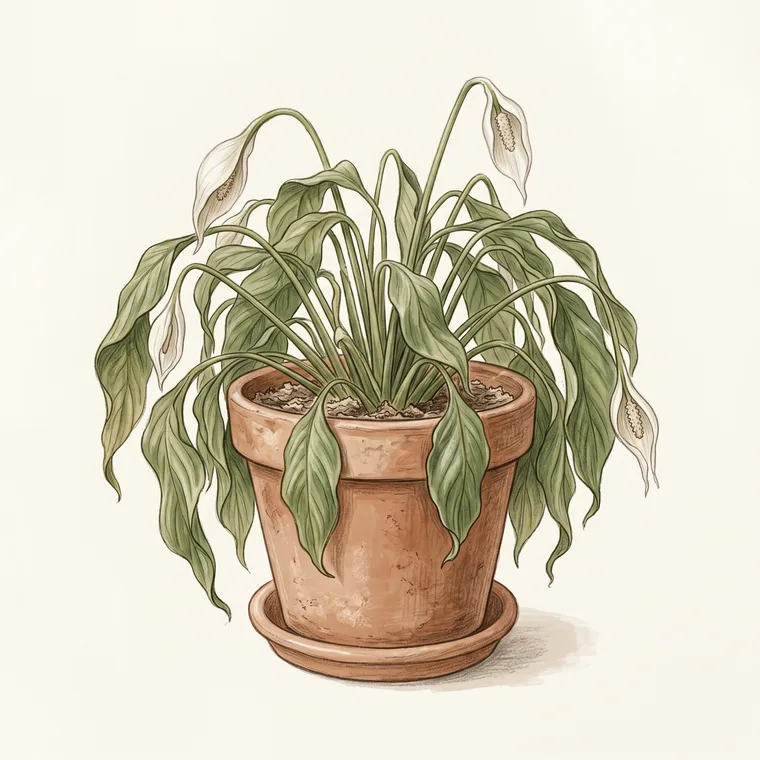
Thirst is the first thing to rule out: a peace lily is a drama queen that collapses when its soil dries out and then springs back within hours of a good soak. Feel the top of the soil — if it is dry, water thoroughly until it runs from the drainage hole. If the soil is wet and it is still wilting, the cause is overwatering and root rot.

Causes, most likely first
- 1. Underwatering — the soil has dried out
How to tell: The whole plant flops at once, the top inch of soil is dry and pulling away from the pot edge, and the pot feels light when you lift it.
Fix: Water thoroughly until it drains from the bottom; if the rootball has gone bone dry, sit the pot in a basin of water for 15–20 minutes. Recovery is usually within a few hours.
- 2. Overwatering and root rot
How to tell: Leaves droop but the soil is still soggy days after watering; lower leaves yellow, and the roots are brown and mushy rather than firm and white.
Fix: Let the soil dry further, then unpot and trim any soft black roots back to healthy tissue. Repot into fresh, free-draining mix and water only when the top 2–3 cm dries.
- 3. Too much direct sun or dry, hot air
How to tell: Leaves wilt and develop crispy brown edges, often worst on the side facing a sunny window or near a radiator or heat vent.
Fix: Move it to bright indirect light away from heat sources, and raise humidity by grouping plants or using a pebble tray.
- 4. Pot-bound roots that dry out too fast
How to tell: The plant wilts a day or two after every watering, roots circle the inside of the pot, and water runs straight through.
Fix: Repot one size up in spring; the larger soil volume holds moisture long enough between waterings.
Preventing a recurrence
Peace lilies grow on the humid floor of tropical American rainforests, where the soil stays evenly moist but never waterlogged. Aim for that: water when the top 2–3 cm feels dry, and let the leaves tell you the cadence — a slight droop is your cue, but do not let it reach a full collapse every time, as repeated severe wilting weakens the plant over months.
Keep it out of direct sun and away from draughts and heat vents, both of which speed up water loss and trigger drooping. Average room humidity is tolerated, but the lush, upright look comes from steady moisture in the air and the soil.
Frequently asked questions
How long does a peace lily take to recover after watering?
If thirst was the only problem, the leaves usually lift within two to four hours and look normal again by the next day. If a full day passes with no improvement after a thorough soak, the issue is the roots, not dryness.
Will my peace lily recover if it droops every single time it dries out?
It survives the odd collapse, but letting it wilt severely again and again damages root hairs and browns the leaf edges over time. Water a touch sooner — at the first slight slump — to keep it from reaching that point.
Why does my peace lily droop right after I repot it?
Repotting disturbs the fine roots that take up water, so a brief droop is normal transplant shock. Keep it in bright indirect light, water lightly, and avoid fertilising for a month while it re-establishes.
Is a wilting peace lily harmful to my cat?
The wilting is not, but the plant is mildly toxic: peace lilies contain insoluble calcium oxalates that irritate a cat's or dog's mouth and cause drooling and vomiting if chewed (ASPCA). It is not the same as the deadly true lilies, but keep it out of reach.
Sources
- RHS — Spathiphyllum (peace lily) care — Royal Horticultural Society, checked 2026-06-13
- Missouri Botanical Garden — Spathiphyllum — Missouri Botanical Garden, checked 2026-06-13
- ASPCA Toxic and Non-Toxic Plants — Peace Lily — ASPCA, checked 2026-06-13